
/
RSS Feed
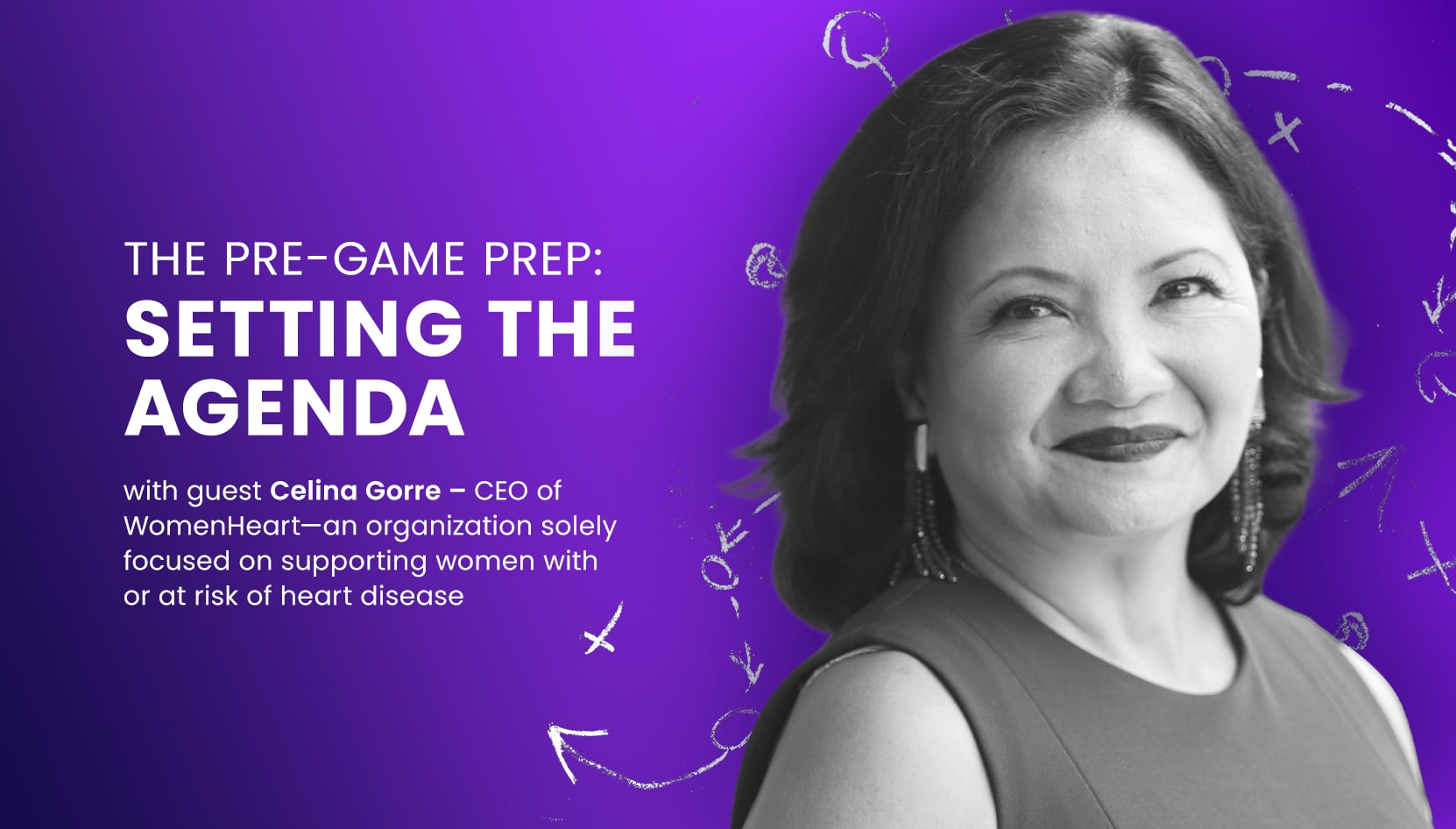
What does your doctor actually need from you to provide the best care? In this episode, Celina Gorre, CEO of WomenHeart, acts as our coach. Celina takes us through an essential drill to prepare for that doctor’s visit, walking us through the five crucial elements to bring, why your wearable trends might matter more than the absolute numbers, and why she says being young doesn’t give you a free pass to ignore your data.
Celina Gorre (00:03)
Ultimately, you are accountable for your health. And so you want to see the doctor as a player, but that person is not the one responsible for your health. You are.
Priya Bathija (00:18)
So you found a doctor. The date is booked and you’re getting ready. You want your meeting with your doctor to be productive. You want to feel heard and you want to make sure that you don’t forget anything. Maybe you have a complicated health history. You’ve got a diagnosis, family history, allergies, previous scan and test results, and you don’t want to have to start at ground zero with your doctor. Or maybe, even if you hate to admit it,
You haven’t seen a doctor in a really long time.
Some people move into prep mode. You’ve got voice memos, checklists, screenshots, symptom trackers, wearable data. But others are frozen. You’ll worry about it the day it comes up, or the hour, or, hail Mary Pass, not at all. But what does your doctor really need from you to help you get the best care possible, especially when no one is going to show up to prep for you and the best advocate you’ve got is yourself?
Hi, I’m Priya Bathija, and this is the Women’s Health Playbook. Together, we’re gonna make healthcare just a little bit easier, because right now, navigating the US healthcare system, especially as a woman, is like playing a game. Except you don’t know the rules. The instructions are written in a language you don’t speak, and the stakes are your life.
So this season, we are diving into the nitty gritty of the doctor’s appointment, because the more we all know, the better healthcare will be for everyone.
Today’s play, prepping for the doctor’s appointment. What should you bring? How important is your family history? What’s the best way to bring your symptoms into the conversation? Does wearable data from Apple watches and Fitbits actually help? What should you leave out? But also, what should you make sure to mention? Our coach for today is Celina Gorre.
Celina Gorre (02:23)
I’m the CEO of WomenHeart. I have been working in the women’s heart health space for almost seven years, but before that have been passionate about global health.
Priya Bathija (02:32)
Celina worked for many years in research funding for chronic diseases in low and middle income countries.
Celina Gorre (02:38)
And before that, my work was in HIV and AIDS, spending some time in Africa and working for the UN.
Priya Bathija (02:44)
Now, her work at WomenHeart is focused on improving the lives of women with or at risk for heart disease.
Celina Gorre (02:51)
The work that we do centers on the creation of women heart champions. So these are women living with heart disease who we take to the Mayo Clinic to get trained to be what I call expert patients.
Priya Bathija (03:05)
These patient experts, what Celina calls women heart champions, then go back into their own communities and support other women with their own heart journeys.
Celina Gorre (03:16)
many of them who believe that they’re alone in this journey. And when they meet a WomenHeart champion, they realize that they can have a sisterhood behind them as they go through this journey. So that’s sort of the, I would say the magic of WomenHeart.
Priya Bathija (03:32)
Based on her experiences with women dealing with heart disease, still the leading cause of death for women in the United States, by the way, Selena is going to take us through a drill to help us prep for that doctor’s appointment. She walks us through what to bring, the importance of prepping your questions ahead, why we need to collect and bring in all our data, and she offers her best tips on helping you maximize your appointment time, and why she says being young doesn’t give you a free pass.
Celina, I’m so excited to have you on the Women’s Health Playbook today. Thank you so much for joining us.
Celina Gorre (04:12)
Absolutely, I’m so honored to speak with you and excited to share some tips for women trying to navigate their own care.
Priya Bathija (04:20)
personally love what you are doing at WomenHeart and I had a chance to attend one of your events earlier this year and meet some of the champions and it is incredible the energy and spirit they have around helping women and closing gaps and making sure that other women have what they may not have had when they were going through their.
interactions with the healthcare system around heart disease. And given that heart disease is the number one killer of women, it’s just such important work and meeting women where they’re at with people who have similar lived experiences is so powerful.
Celina Gorre (05:03)
It was so grateful to see you at our summit, Priya. I was so excited. ⁓ You know, I can brag about WomenHeart champions all day long, but I don’t really need to do it if you get to meet them because they just, you know, exude this confidence that makes you feel so safe, right? And that’s like, that’s what we’re trying to convey to women with heart disease.
And the best thing about champions, my favorite thing about champions is they do it showing up as they are, right? There’s not anything that they need to do other than be who they are and tell their truth. And that power is, it’s priceless. And it’s an honor for me to get to work with them.
Priya Bathija (05:50)
Yeah. We’re here to talk about how to prepare for a doctor’s appointment. We’ve already had an episode on how to find a doctor. So now that women have a doctor, let’s start with the basics. What types of things should women be bringing to their appointments or thinking about in advance of the appointment?
Celina Gorre (06:13)
Yeah, this is really important. Preparing for your appointments allows you to maximize the short time that you have with your clinician. I would say be prepared with all your questions, so write them down. And if you need to, that’s a really helpful use of AI is generating a list of questions, putting in your symptoms and saying, this is what I’m worried about.
you can ask it to generate a list of questions for you. That is really helpful, because oftentimes I find that when I’m in front of my clinician, I forget half the things that I want to ask. So having that list is really, really important. ⁓ The other huge thing I would say is bring your medications, any medication that you’re on, at least have a list, if not bring them with you.
I would also make sure to include any supplements or vitamins that you’re taking. They’re gonna wanna know that information as well. And this is really key. Don’t think that because they did not prescribe it, you shouldn’t bring it or they’re not concerned about it. Because they’re also looking at interactions between medications, interactions between a medication and a supplement, right? Like that’s all really, really important. And if possible,
I would consider bringing somebody with you to the appointment because they may hear something that you miss or they may ask a question that you forgot. It’s really helpful to then have somebody to reflect on the appointment after.
Priya Bathija (07:50)
Yeah. And Celina, what if you’re going into an appointment and you already have symptoms of some sort? What’s the best way to bring that into the conversation with your doctor?
Celina Gorre (08:01)
Great, great question. Once you make the appointment or even before that, writing down and noting your symptoms is really important. They’re gonna ask you questions like, when do you feel it? Do you feel it at the same time of the day? How long do they last? What’s the intensity? Have you eaten before or after? What’s happening around your experience of those symptoms? So you wanna make sure to jot those down. It’s also really important
to be confident in your experience of those symptoms. And what I mean by that is you may be experiencing symptoms and you may experience the clinician dismissing those symptoms or minimizing those symptoms. And I would just say from my own experience as well, make sure that you are advocating for yourself in the context of these appointments.
especially if you think it’s something serious. It’s really, really crucial for you to advocate for yourself in that context.
Priya Bathija (09:06)
love that you mentioned that and that is a theme that sort of flows through the other episodes in this play. And I think it’s an important theme that deserves repeating in every episode because we know our bodies best. We understand what symptoms we’re experiencing, how long they’re lasting, what their intensity level is, better than anyone else can know. And so it’s our job
as we interact with clinicians to share that and as you said, share it confidently.
Celina Gorre (09:40)
One really important aspect of symptoms is when you experience something you’ve never experienced before. So especially if the symptom is a common symptom, so fatigue. We’ve all experienced some version of fatigue. And fatigue is a symptom of many, many things. When someone says, I experienced fatigue. What does that mean exactly? What’s important to note is if this is the kind of fatigue you’ve never experienced before.
or if this is the kind of fatigue that feels unusual, like you used to be able to walk up a flight of stairs with no problem, and now you have to stop at the top and take a breath, right? That’s a significant change in your ability to live your day-to-day life, and that should be noted.
Priya Bathija (10:28)
Yeah, very helpful. And what types of medical records or test results did you prepare to bring? Do you bring them in from your whole life? Do you bring them in just from these symptoms or other doctors you’ve met with recently? What should you be gathering in advance of your appointment?
Celina Gorre (10:44)
Yeah, it’s a great question. For those who have their medical records in a system like a MyChart or an Epic, it’s probably enough to have access to that, especially if you’ve been in the same system for years, because then your test history, your medication history, and all of that will be captured there. But if you are, let’s say, new to this doctor or new to this practice ⁓ and they’re on a different system,
than what you have been in in the past, it’s really important to bring that. For some people, they’re navigating multiple systems and having to manually bring that information together. I cannot stress enough how important it is to sort of build the history for yourself, for your healthcare professional, your clinician. And I would just say, you the question that you asked Priya, like, should you bring your whole life history? That’s not necessary except
There are some really key things that your doctor needs to know about you or your provider needs to know about you. Have you ever been pregnant? If you have been pregnant, did you experience any symptoms during your pregnancy? Did you have preeclampsia? Did you have gestational diabetes? Did you deliver early? All of these things inform not just your gynecological…
experience but also your cardiovascular experience and other systems. And then what’s your experience been with menopause and that’s another really important inflection point. So if that information isn’t reflected in your medical records and that’s additional information to provide to the doctor that you’re seeing.
Priya Bathija (12:28)
Yeah, that’s really great. And you mentioned how important it is to know your history. And one part of that is your family history. Can you talk a little bit more about why it’s so important to bring that with you to your visit and what it should look like?
Celina Gorre (12:35)
Absolutely.
Somebody said this recently at a talk that I was at and I thought it really stuck with me. He said, we are the accumulation of everything that has come before us. And that really resonated. So it’s not optional to learn about what your parents’ health history is or what your siblings’ health history is or your grandparents, but it’s.
It’s part of who you are. It’s part of what makes you who you are, especially in the context of your health. And I’ll use myself as an example. It’s really important that I convey to any doctor that I see that my mother died of colon cancer at the age of 39 because the recommendation for the beginning of colonoscopy screening is certainly older than 39.
So if I waited until the recommended starting of the screenings, it would be far too late for me. So I advocated for myself and started getting my screenings, my colonoscopies at 24. And as a consequence have had a few tiny, tiny polyps removed during the process, et cetera. So, I mean, that’s just one example of how your family history is so critical in preventive screenings, in…
getting testing for ⁓ various conditions. And sad to say heart disease is one of those things that often runs in families.
Priya Bathija (14:18)
Yeah, and Celina, think one thing I’ve noticed in my experience in healthcare is that certain communities have a hard time talking about this. ⁓ I know for myself as South Asians, we don’t just sit around the table and talk about our history of diabetes and hypertension, but it’s so important that we do. Do you have any suggestion for people on how to sort of set the stage for that conversation with family members?
Celina Gorre (14:44)
Yeah, you know, we also talk often about how women put their health last, right, in the context of their family. And so I love this reframe. Recently, I was part of an event called Generational Health. And I think that framing is really powerful, right, to think about not just your health, but your family’s health and how they’re intimately related.
And so when I think about how do you have those conversations, there’s a couple ways to do it. You can blame your doctor. You can say, hey, look, I just came from doctor’s office. My doctor asked me to ask about family history. Can we have that conversation? I’ve also seen some really helpful and actually playful cards, like card games that have questions that you can ask one another.
Again, like so that it doesn’t fall on you as the individual to sort of be the one to initiate these conversations. There’s other ways sort of outside forces that you can blame, quote unquote blame ⁓ as a reason for starting these conversations up. But, you know, it’s all in service of getting the full picture ⁓ and perhaps
you by you learning something, you can help somebody else in your family in, you know, figuring out what their risks are connected to their health.
Priya Bathija (16:17)
That’s really great. And I never knew that there were card games that could promote these conversations. That’s really exciting to hear because I think anytime we can take what we need for our health and insert it into our fun and the way that we interact with others, it just makes us all better.
Celina Gorre (16:36)
Yeah, totally.
Priya Bathija (16:42)
Hey, it’s Priya. I just wanted to pop in here and encourage you to send this episode to a friend. The information we’re sharing here is so valuable, and it’s how we help each other get the best care possible as women in America. So hit the share button on whatever app you’re listening on. Send it to your daughter, sister, aunt, mother, a coworker, or honestly, send it to every girl dad you know, because the more we all know, the better healthcare will be for everyone. Okay.
to the play. Selena, can you share why it’s so important for women of all ages, but specifically younger women, to pay attention to their health care and prepare for their doctor’s appointment?
Celina Gorre (17:29)
Yeah, one thing is it’s really important for all of us to know what our baseline risk is. And what I mean by that is we have genetic risks, right? Risks that come because we’re part of a family, but we also have risks that come as a result of how we live our lives. For me, I live a high stress life. so stress is a key contributing factor to my heart disease. ⁓ Somebody else might live a life where ⁓ they
are quite sedentary in their jobs, so they’re not exercising enough. So understanding how our life, ⁓ both genetics and the way we live day to day, impacts our risk and understanding what that risk is as early as possible is really, really crucial. ⁓ The good news is that things that we used to not be able to do anything about before, we’re now able to do something about it. ⁓ And so…
know, seeing a doctor and establishing your risk profile is really critical to managing and having a long and healthy life in front of you.
Priya Bathija (18:34)
You’ve made this point in previous conversations that we’ve had that doing that starting young is so important. And we often don’t think about that, right? When we’re young, we think that we’re invincible. And all of this stuff may catch up with us later, but we don’t realize how what we’re doing at the age of 20 or 30 or 40 actually impacts our future. And we have the opportunity to set ourselves up for success.
Celina Gorre (19:01)
You know, hear all the time that 80 % of cardiovascular disease is preventable. It’s preventable. They should always say it’s more preventable the earlier you start, right? And so I think that’s the key message here. Look, if you go to the doctor and the doctor says, you know, you’re doing all the right things, isn’t that something worth knowing so that you can keep doing those things? But if there are ways that you can improve your outlook and your cardiovascular health, that’s also worth knowing.
Priya Bathija (19:29)
Another thing that people are using these days are wearables, right? So we have Oura rings, Apple watches, Fitbits. How do you bring the information that those devices are telling you into your doctor’s appointment?
Celina Gorre (19:44)
It’s a great question and I have had those conversations often with my different clinicians and my experience is that they tend to minimize the value of the information that you get from these wearables. But what I will say is that what is valuable is looking less at absolute value, the actual numbers and focusing on trends.
Right, so seeing that over time, your estimated VO2 max is going down. That is something worth alerting your doctor about. Or your sleep is really patchy. And so while one night of bad sleep may not be alarming, you could say over the last year, I’ve gone from seven hours of really great sleep to five hours of really great sleep.
I’m tired every morning. So that is really useful. So think about the utility of the information that you’re getting from the wearables. That can’t be ignored. That’s the way I think about the value of ⁓ the information we get from the wearables.
Priya Bathija (20:58)
Yeah, that’s great. ⁓ And you can certainly see those trends, right? Especially for women who are in perimenopause and all of a sudden they see changes in their sleep. If they’re tracking their diet, that can be impacted by the number of hours they’re sleeping in a night. So that’s really great advice. And you touched previously on making your list of questions. So before you go into your appointment,
Now you’ve gathered all the things you need, right? You have your history, you have your family history, you have your wearable information. What’s important to know as you map out your questions and the agenda for your appointment with your doctor.
Celina Gorre (21:39)
Yeah, I would say that you want to prioritize what matters the most to you. ⁓ You know, it may be around the symptoms that you’re feeling first and foremost, especially if you’re going to your primary care doc and you’ve got a whole slew of questions. You may want to prioritize the things that are impacting you the most. First and foremost, if you are experiencing, for example, any kind of chest pain,
That is top, top priority. It should be prioritized over anything else that you talk about. ⁓ But then you’re gonna have different layers of importance to different things in terms of how it impacts your ability to live your life, right? And that really is yours to assess. But also don’t be afraid to say, know what, let’s cover these things in this appointment.
But if we run out of time, I’m gonna make another appointment to cover these things. I feel like we put a lot of pressure on these appointments and we always say, you know, we never have enough time, these appointments are really short. Well, nothing should prevent you from making a second appointment if you need it to do follow up. And if you are needing to get labs, so if you have to go get blood tests after the appointment, you should be doing follow up anyway.
That’s really, really important. I’ve had the experience where I am ⁓ referred to get lab work, blood draws, ⁓ and then I don’t hear from my clinician at all in terms of follow-up. And the lab results just sort of sit in my portal, and then I have to go in and look at them and figure them out myself. ⁓ You are absolutely within your rights to say, hey, I need a follow-up appointment to discuss the results of this.
So yeah, that’s the way I think about how to use that limited time is to prioritize the issues, whether there are symptoms that are most urgent for you.
Priya Bathija (23:41)
Yeah, I think that’s great advice. And also, I just note that a lot of clinicians don’t make you wait as long for that second follow-up appointment as you may have waited for your first appointment. So you may have waited six months to get in for your first appointment. But once you get the lab work results, different testing results, you can typically get in much faster to have that follow-up appointment to address them.
Celina Gorre (24:05)
Yeah, I tend to agree with that.
Priya Bathija (24:08)
What tips and tools and actions can women take to better prepare for their doctor’s visits?
Celina Gorre (24:16)
like to think of it as preparing in the same way that you might prepare for a job interview, right? You want to get the most out of that limited time. So again, you know, we talked about the tools of listed questions and the list of medications, et cetera, but also get yourself into a mindset that you are a consumer and that what you’re looking for in your clinician as a partner, we all too often
think of the doctor as the final word, but in sort of medicine in 2026, it should really be about partnership. In fact, the language these days among clinicians is this notion of shared decision-making, right? Where the doctor brings you all these different options to address the issues that you’re facing. And it’s really
you know, a partnership between you and your clinician as to what you actually end up doing. Right? You may be, you may be assessing different medications to take or treatment routes to take. and what they’re trying to do is what hopefully they’re trying to do is work with you to say, okay, what works best for your life? What works best for your lifestyle? We have drugs now that you can take, you know, once every ⁓ six months. And it’s a shot that you take in the doctor’s office.
Is that more convenient for you than to take a daily oral pill? There’s so many opportunities to make decisions together. I think it’s helpful for women to go into that doctor’s visit with that mindset that I’m here as a partner to my doctor. And I would also add that you want to trust your doctor. Like you want to have a good relationship with your doctor. You don’t want to
be intimidated or be afraid of that person. You want to feel like you can have a dialogue with them and so most importantly, that you can be completely honest with them. It does no good to hide things from your doctor or not to give them the full picture because ultimately you’re the one that’s gonna suffer from that lack of information. So being as honest as possible is so, so crucial.
Priya Bathija (26:39)
And I love the concept you shared about shared decision making, because we often, as health care leaders in this field, talk about meeting patients where they are. And I think shared decision making is such a great way to actually do that. And that example that you gave about, it easier for you to come in once for a shot, or is it easier for you as the patient to remember to take your pill every day? That’s right.
It makes you feel like it truly is a partnership where you’re in it together and whether you get healthy or you stay unwell, you’re both invested in that change.
Celina Gorre (27:19)
Absolutely. Yeah, absolutely.
Priya Bathija (27:21)
So anything else you’d like to add that we haven’t covered already about preparing for your doctor’s appointment?
Celina Gorre (27:27)
Ultimately, you are accountable for your health. You want to see the doctor as a player. That person is not the one responsible for your health. You are. And so it’s your responsibility to get the doctor that will help you the most in achieving the kind of health that you are after. I think that’s really important to keep in mind ⁓ so that you retain agency in your ability to seek the health that you’re looking for.
Priya Bathija (27:57)
I love that. Well, Celina, thank you so much for being with us to navigate how to prepare for your doctor’s appointment. And that’s a wrap on this episode of the Women’s Health Playbook.
Thank you for listening to the Women’s Health Playbook. We hope this breakdown helps you receive better care as a woman in the United States. If you want to dive deeper into the tactics and resources we discussed today, you can find those in the show notes for this episode. The Women’s Health Playbook is brought to you by Nyoo Health. That’s my company. We help people and organizations reimagine how they prioritize and deliver care for women. For more information on the work we do, visit newhealth.com. That’s N-y-o-o health.com. And for more plays you can use to take control of your health and healthcare journey, visit us at womenshealthplaybook.com. I’m Priya Bathija. Catch the next episode of the Women’s Health Playbook right now in your favorite podcasting app. And we hope you’ll share this episode with a friend because the more we all know, the better healthcare will be for everyone.
Ultimately, you are accountable for your health. And so you want to see the doctor as a player, but that person is not the one responsible for your health. You are.
Priya Bathija (00:18)
So you found a doctor. The date is booked and you’re getting ready. You want your meeting with your doctor to be productive. You want to feel heard and you want to make sure that you don’t forget anything. Maybe you have a complicated health history. You’ve got a diagnosis, family history, allergies, previous scan and test results, and you don’t want to have to start at ground zero with your doctor. Or maybe, even if you hate to admit it,
You haven’t seen a doctor in a really long time.
Some people move into prep mode. You’ve got voice memos, checklists, screenshots, symptom trackers, wearable data. But others are frozen. You’ll worry about it the day it comes up, or the hour, or, hail Mary Pass, not at all. But what does your doctor really need from you to help you get the best care possible, especially when no one is going to show up to prep for you and the best advocate you’ve got is yourself?
Hi, I’m Priya Bathija, and this is the Women’s Health Playbook. Together, we’re gonna make healthcare just a little bit easier, because right now, navigating the US healthcare system, especially as a woman, is like playing a game. Except you don’t know the rules. The instructions are written in a language you don’t speak, and the stakes are your life.
So this season, we are diving into the nitty gritty of the doctor’s appointment, because the more we all know, the better healthcare will be for everyone.
Today’s play, prepping for the doctor’s appointment. What should you bring? How important is your family history? What’s the best way to bring your symptoms into the conversation? Does wearable data from Apple watches and Fitbits actually help? What should you leave out? But also, what should you make sure to mention? Our coach for today is Celina Gorre.
Celina Gorre (02:23)
I’m the CEO of WomenHeart. I have been working in the women’s heart health space for almost seven years, but before that have been passionate about global health.
Priya Bathija (02:32)
Celina worked for many years in research funding for chronic diseases in low and middle income countries.
Celina Gorre (02:38)
And before that, my work was in HIV and AIDS, spending some time in Africa and working for the UN.
Priya Bathija (02:44)
Now, her work at WomenHeart is focused on improving the lives of women with or at risk for heart disease.
Celina Gorre (02:51)
The work that we do centers on the creation of women heart champions. So these are women living with heart disease who we take to the Mayo Clinic to get trained to be what I call expert patients.
Priya Bathija (03:05)
These patient experts, what Celina calls women heart champions, then go back into their own communities and support other women with their own heart journeys.
Celina Gorre (03:16)
many of them who believe that they’re alone in this journey. And when they meet a WomenHeart champion, they realize that they can have a sisterhood behind them as they go through this journey. So that’s sort of the, I would say the magic of WomenHeart.
Priya Bathija (03:32)
Based on her experiences with women dealing with heart disease, still the leading cause of death for women in the United States, by the way, Selena is going to take us through a drill to help us prep for that doctor’s appointment. She walks us through what to bring, the importance of prepping your questions ahead, why we need to collect and bring in all our data, and she offers her best tips on helping you maximize your appointment time, and why she says being young doesn’t give you a free pass.
Celina, I’m so excited to have you on the Women’s Health Playbook today. Thank you so much for joining us.
Celina Gorre (04:12)
Absolutely, I’m so honored to speak with you and excited to share some tips for women trying to navigate their own care.
Priya Bathija (04:20)
personally love what you are doing at WomenHeart and I had a chance to attend one of your events earlier this year and meet some of the champions and it is incredible the energy and spirit they have around helping women and closing gaps and making sure that other women have what they may not have had when they were going through their.
interactions with the healthcare system around heart disease. And given that heart disease is the number one killer of women, it’s just such important work and meeting women where they’re at with people who have similar lived experiences is so powerful.
Celina Gorre (05:03)
It was so grateful to see you at our summit, Priya. I was so excited. ⁓ You know, I can brag about WomenHeart champions all day long, but I don’t really need to do it if you get to meet them because they just, you know, exude this confidence that makes you feel so safe, right? And that’s like, that’s what we’re trying to convey to women with heart disease.
And the best thing about champions, my favorite thing about champions is they do it showing up as they are, right? There’s not anything that they need to do other than be who they are and tell their truth. And that power is, it’s priceless. And it’s an honor for me to get to work with them.
Priya Bathija (05:50)
Yeah. We’re here to talk about how to prepare for a doctor’s appointment. We’ve already had an episode on how to find a doctor. So now that women have a doctor, let’s start with the basics. What types of things should women be bringing to their appointments or thinking about in advance of the appointment?
Celina Gorre (06:13)
Yeah, this is really important. Preparing for your appointments allows you to maximize the short time that you have with your clinician. I would say be prepared with all your questions, so write them down. And if you need to, that’s a really helpful use of AI is generating a list of questions, putting in your symptoms and saying, this is what I’m worried about.
you can ask it to generate a list of questions for you. That is really helpful, because oftentimes I find that when I’m in front of my clinician, I forget half the things that I want to ask. So having that list is really, really important. ⁓ The other huge thing I would say is bring your medications, any medication that you’re on, at least have a list, if not bring them with you.
I would also make sure to include any supplements or vitamins that you’re taking. They’re gonna wanna know that information as well. And this is really key. Don’t think that because they did not prescribe it, you shouldn’t bring it or they’re not concerned about it. Because they’re also looking at interactions between medications, interactions between a medication and a supplement, right? Like that’s all really, really important. And if possible,
I would consider bringing somebody with you to the appointment because they may hear something that you miss or they may ask a question that you forgot. It’s really helpful to then have somebody to reflect on the appointment after.
Priya Bathija (07:50)
Yeah. And Celina, what if you’re going into an appointment and you already have symptoms of some sort? What’s the best way to bring that into the conversation with your doctor?
Celina Gorre (08:01)
Great, great question. Once you make the appointment or even before that, writing down and noting your symptoms is really important. They’re gonna ask you questions like, when do you feel it? Do you feel it at the same time of the day? How long do they last? What’s the intensity? Have you eaten before or after? What’s happening around your experience of those symptoms? So you wanna make sure to jot those down. It’s also really important
to be confident in your experience of those symptoms. And what I mean by that is you may be experiencing symptoms and you may experience the clinician dismissing those symptoms or minimizing those symptoms. And I would just say from my own experience as well, make sure that you are advocating for yourself in the context of these appointments.
especially if you think it’s something serious. It’s really, really crucial for you to advocate for yourself in that context.
Priya Bathija (09:06)
love that you mentioned that and that is a theme that sort of flows through the other episodes in this play. And I think it’s an important theme that deserves repeating in every episode because we know our bodies best. We understand what symptoms we’re experiencing, how long they’re lasting, what their intensity level is, better than anyone else can know. And so it’s our job
as we interact with clinicians to share that and as you said, share it confidently.
Celina Gorre (09:40)
One really important aspect of symptoms is when you experience something you’ve never experienced before. So especially if the symptom is a common symptom, so fatigue. We’ve all experienced some version of fatigue. And fatigue is a symptom of many, many things. When someone says, I experienced fatigue. What does that mean exactly? What’s important to note is if this is the kind of fatigue you’ve never experienced before.
or if this is the kind of fatigue that feels unusual, like you used to be able to walk up a flight of stairs with no problem, and now you have to stop at the top and take a breath, right? That’s a significant change in your ability to live your day-to-day life, and that should be noted.
Priya Bathija (10:28)
Yeah, very helpful. And what types of medical records or test results did you prepare to bring? Do you bring them in from your whole life? Do you bring them in just from these symptoms or other doctors you’ve met with recently? What should you be gathering in advance of your appointment?
Celina Gorre (10:44)
Yeah, it’s a great question. For those who have their medical records in a system like a MyChart or an Epic, it’s probably enough to have access to that, especially if you’ve been in the same system for years, because then your test history, your medication history, and all of that will be captured there. But if you are, let’s say, new to this doctor or new to this practice ⁓ and they’re on a different system,
than what you have been in in the past, it’s really important to bring that. For some people, they’re navigating multiple systems and having to manually bring that information together. I cannot stress enough how important it is to sort of build the history for yourself, for your healthcare professional, your clinician. And I would just say, you the question that you asked Priya, like, should you bring your whole life history? That’s not necessary except
There are some really key things that your doctor needs to know about you or your provider needs to know about you. Have you ever been pregnant? If you have been pregnant, did you experience any symptoms during your pregnancy? Did you have preeclampsia? Did you have gestational diabetes? Did you deliver early? All of these things inform not just your gynecological…
experience but also your cardiovascular experience and other systems. And then what’s your experience been with menopause and that’s another really important inflection point. So if that information isn’t reflected in your medical records and that’s additional information to provide to the doctor that you’re seeing.
Priya Bathija (12:28)
Yeah, that’s really great. And you mentioned how important it is to know your history. And one part of that is your family history. Can you talk a little bit more about why it’s so important to bring that with you to your visit and what it should look like?
Celina Gorre (12:35)
Absolutely.
Somebody said this recently at a talk that I was at and I thought it really stuck with me. He said, we are the accumulation of everything that has come before us. And that really resonated. So it’s not optional to learn about what your parents’ health history is or what your siblings’ health history is or your grandparents, but it’s.
It’s part of who you are. It’s part of what makes you who you are, especially in the context of your health. And I’ll use myself as an example. It’s really important that I convey to any doctor that I see that my mother died of colon cancer at the age of 39 because the recommendation for the beginning of colonoscopy screening is certainly older than 39.
So if I waited until the recommended starting of the screenings, it would be far too late for me. So I advocated for myself and started getting my screenings, my colonoscopies at 24. And as a consequence have had a few tiny, tiny polyps removed during the process, et cetera. So, I mean, that’s just one example of how your family history is so critical in preventive screenings, in…
getting testing for ⁓ various conditions. And sad to say heart disease is one of those things that often runs in families.
Priya Bathija (14:18)
Yeah, and Celina, think one thing I’ve noticed in my experience in healthcare is that certain communities have a hard time talking about this. ⁓ I know for myself as South Asians, we don’t just sit around the table and talk about our history of diabetes and hypertension, but it’s so important that we do. Do you have any suggestion for people on how to sort of set the stage for that conversation with family members?
Celina Gorre (14:44)
Yeah, you know, we also talk often about how women put their health last, right, in the context of their family. And so I love this reframe. Recently, I was part of an event called Generational Health. And I think that framing is really powerful, right, to think about not just your health, but your family’s health and how they’re intimately related.
And so when I think about how do you have those conversations, there’s a couple ways to do it. You can blame your doctor. You can say, hey, look, I just came from doctor’s office. My doctor asked me to ask about family history. Can we have that conversation? I’ve also seen some really helpful and actually playful cards, like card games that have questions that you can ask one another.
Again, like so that it doesn’t fall on you as the individual to sort of be the one to initiate these conversations. There’s other ways sort of outside forces that you can blame, quote unquote blame ⁓ as a reason for starting these conversations up. But, you know, it’s all in service of getting the full picture ⁓ and perhaps
you by you learning something, you can help somebody else in your family in, you know, figuring out what their risks are connected to their health.
Priya Bathija (16:17)
That’s really great. And I never knew that there were card games that could promote these conversations. That’s really exciting to hear because I think anytime we can take what we need for our health and insert it into our fun and the way that we interact with others, it just makes us all better.
Celina Gorre (16:36)
Yeah, totally.
Priya Bathija (16:42)
Hey, it’s Priya. I just wanted to pop in here and encourage you to send this episode to a friend. The information we’re sharing here is so valuable, and it’s how we help each other get the best care possible as women in America. So hit the share button on whatever app you’re listening on. Send it to your daughter, sister, aunt, mother, a coworker, or honestly, send it to every girl dad you know, because the more we all know, the better healthcare will be for everyone. Okay.
to the play. Selena, can you share why it’s so important for women of all ages, but specifically younger women, to pay attention to their health care and prepare for their doctor’s appointment?
Celina Gorre (17:29)
Yeah, one thing is it’s really important for all of us to know what our baseline risk is. And what I mean by that is we have genetic risks, right? Risks that come because we’re part of a family, but we also have risks that come as a result of how we live our lives. For me, I live a high stress life. so stress is a key contributing factor to my heart disease. ⁓ Somebody else might live a life where ⁓ they
are quite sedentary in their jobs, so they’re not exercising enough. So understanding how our life, ⁓ both genetics and the way we live day to day, impacts our risk and understanding what that risk is as early as possible is really, really crucial. ⁓ The good news is that things that we used to not be able to do anything about before, we’re now able to do something about it. ⁓ And so…
know, seeing a doctor and establishing your risk profile is really critical to managing and having a long and healthy life in front of you.
Priya Bathija (18:34)
You’ve made this point in previous conversations that we’ve had that doing that starting young is so important. And we often don’t think about that, right? When we’re young, we think that we’re invincible. And all of this stuff may catch up with us later, but we don’t realize how what we’re doing at the age of 20 or 30 or 40 actually impacts our future. And we have the opportunity to set ourselves up for success.
Celina Gorre (19:01)
You know, hear all the time that 80 % of cardiovascular disease is preventable. It’s preventable. They should always say it’s more preventable the earlier you start, right? And so I think that’s the key message here. Look, if you go to the doctor and the doctor says, you know, you’re doing all the right things, isn’t that something worth knowing so that you can keep doing those things? But if there are ways that you can improve your outlook and your cardiovascular health, that’s also worth knowing.
Priya Bathija (19:29)
Another thing that people are using these days are wearables, right? So we have Oura rings, Apple watches, Fitbits. How do you bring the information that those devices are telling you into your doctor’s appointment?
Celina Gorre (19:44)
It’s a great question and I have had those conversations often with my different clinicians and my experience is that they tend to minimize the value of the information that you get from these wearables. But what I will say is that what is valuable is looking less at absolute value, the actual numbers and focusing on trends.
Right, so seeing that over time, your estimated VO2 max is going down. That is something worth alerting your doctor about. Or your sleep is really patchy. And so while one night of bad sleep may not be alarming, you could say over the last year, I’ve gone from seven hours of really great sleep to five hours of really great sleep.
I’m tired every morning. So that is really useful. So think about the utility of the information that you’re getting from the wearables. That can’t be ignored. That’s the way I think about the value of ⁓ the information we get from the wearables.
Priya Bathija (20:58)
Yeah, that’s great. ⁓ And you can certainly see those trends, right? Especially for women who are in perimenopause and all of a sudden they see changes in their sleep. If they’re tracking their diet, that can be impacted by the number of hours they’re sleeping in a night. So that’s really great advice. And you touched previously on making your list of questions. So before you go into your appointment,
Now you’ve gathered all the things you need, right? You have your history, you have your family history, you have your wearable information. What’s important to know as you map out your questions and the agenda for your appointment with your doctor.
Celina Gorre (21:39)
Yeah, I would say that you want to prioritize what matters the most to you. ⁓ You know, it may be around the symptoms that you’re feeling first and foremost, especially if you’re going to your primary care doc and you’ve got a whole slew of questions. You may want to prioritize the things that are impacting you the most. First and foremost, if you are experiencing, for example, any kind of chest pain,
That is top, top priority. It should be prioritized over anything else that you talk about. ⁓ But then you’re gonna have different layers of importance to different things in terms of how it impacts your ability to live your life, right? And that really is yours to assess. But also don’t be afraid to say, know what, let’s cover these things in this appointment.
But if we run out of time, I’m gonna make another appointment to cover these things. I feel like we put a lot of pressure on these appointments and we always say, you know, we never have enough time, these appointments are really short. Well, nothing should prevent you from making a second appointment if you need it to do follow up. And if you are needing to get labs, so if you have to go get blood tests after the appointment, you should be doing follow up anyway.
That’s really, really important. I’ve had the experience where I am ⁓ referred to get lab work, blood draws, ⁓ and then I don’t hear from my clinician at all in terms of follow-up. And the lab results just sort of sit in my portal, and then I have to go in and look at them and figure them out myself. ⁓ You are absolutely within your rights to say, hey, I need a follow-up appointment to discuss the results of this.
So yeah, that’s the way I think about how to use that limited time is to prioritize the issues, whether there are symptoms that are most urgent for you.
Priya Bathija (23:41)
Yeah, I think that’s great advice. And also, I just note that a lot of clinicians don’t make you wait as long for that second follow-up appointment as you may have waited for your first appointment. So you may have waited six months to get in for your first appointment. But once you get the lab work results, different testing results, you can typically get in much faster to have that follow-up appointment to address them.
Celina Gorre (24:05)
Yeah, I tend to agree with that.
Priya Bathija (24:08)
What tips and tools and actions can women take to better prepare for their doctor’s visits?
Celina Gorre (24:16)
like to think of it as preparing in the same way that you might prepare for a job interview, right? You want to get the most out of that limited time. So again, you know, we talked about the tools of listed questions and the list of medications, et cetera, but also get yourself into a mindset that you are a consumer and that what you’re looking for in your clinician as a partner, we all too often
think of the doctor as the final word, but in sort of medicine in 2026, it should really be about partnership. In fact, the language these days among clinicians is this notion of shared decision-making, right? Where the doctor brings you all these different options to address the issues that you’re facing. And it’s really
you know, a partnership between you and your clinician as to what you actually end up doing. Right? You may be, you may be assessing different medications to take or treatment routes to take. and what they’re trying to do is what hopefully they’re trying to do is work with you to say, okay, what works best for your life? What works best for your lifestyle? We have drugs now that you can take, you know, once every ⁓ six months. And it’s a shot that you take in the doctor’s office.
Is that more convenient for you than to take a daily oral pill? There’s so many opportunities to make decisions together. I think it’s helpful for women to go into that doctor’s visit with that mindset that I’m here as a partner to my doctor. And I would also add that you want to trust your doctor. Like you want to have a good relationship with your doctor. You don’t want to
be intimidated or be afraid of that person. You want to feel like you can have a dialogue with them and so most importantly, that you can be completely honest with them. It does no good to hide things from your doctor or not to give them the full picture because ultimately you’re the one that’s gonna suffer from that lack of information. So being as honest as possible is so, so crucial.
Priya Bathija (26:39)
And I love the concept you shared about shared decision making, because we often, as health care leaders in this field, talk about meeting patients where they are. And I think shared decision making is such a great way to actually do that. And that example that you gave about, it easier for you to come in once for a shot, or is it easier for you as the patient to remember to take your pill every day? That’s right.
It makes you feel like it truly is a partnership where you’re in it together and whether you get healthy or you stay unwell, you’re both invested in that change.
Celina Gorre (27:19)
Absolutely. Yeah, absolutely.
Priya Bathija (27:21)
So anything else you’d like to add that we haven’t covered already about preparing for your doctor’s appointment?
Celina Gorre (27:27)
Ultimately, you are accountable for your health. You want to see the doctor as a player. That person is not the one responsible for your health. You are. And so it’s your responsibility to get the doctor that will help you the most in achieving the kind of health that you are after. I think that’s really important to keep in mind ⁓ so that you retain agency in your ability to seek the health that you’re looking for.
Priya Bathija (27:57)
I love that. Well, Celina, thank you so much for being with us to navigate how to prepare for your doctor’s appointment. And that’s a wrap on this episode of the Women’s Health Playbook.
Thank you for listening to the Women’s Health Playbook. We hope this breakdown helps you receive better care as a woman in the United States. If you want to dive deeper into the tactics and resources we discussed today, you can find those in the show notes for this episode. The Women’s Health Playbook is brought to you by Nyoo Health. That’s my company. We help people and organizations reimagine how they prioritize and deliver care for women. For more information on the work we do, visit newhealth.com. That’s N-y-o-o health.com. And for more plays you can use to take control of your health and healthcare journey, visit us at womenshealthplaybook.com. I’m Priya Bathija. Catch the next episode of the Women’s Health Playbook right now in your favorite podcasting app. And we hope you’ll share this episode with a friend because the more we all know, the better healthcare will be for everyone.
In this episode, we walk you through these key topics:
- The 5 Big “Packs”: A checklist of the five concrete categories you must prepare or bring to any appointment.
- Mastering Symptoms: How to note intensity, frequency, and changes in your “day-to-day” life (e.g., the fatigue that’s different).
- Pregnancy as a Stress Test: Why your history of preeclampsia or gestational diabetes is vital data for all your future doctors, not just your OB-GYN.
- The “Generational Health” Audible: Creative ways to get your family to talk about their health history (including card games and “blaming the doctor”).
- Wearable Realities: How to frame the data from your Apple Watch or Fitbit—focusing on trends over numbers—so your doctor takes it seriously.
- Shared Decision-Making: The shift toward a partner-consumer mindset where the doctor presents options, but you determine what works best for your lifestyle.
The Playbook: Your Pregame Checklist
Celina Gorre suggests organizing these specific items before your appointment to maximize your limited time:
- Your List of Questions: Write them down. Use AI to generate a list if you are stuck.
- Medications & Supplements: Bring the actual bottles (or a full, written list) of everything you take, regardless of whether that doctor prescribed it.
- A Symptom Diary: Note when symptoms happen, their duration, intensity, and if they feel unusual compared to your normal life.
- Pregnancy & Inflection Point History: Note any history of delivery issues, gestational diabetes, menopause symptoms, or significant weight changes.
- Family History: Know the health history of your parents, siblings, and grandparents. If you’re not sure how to ask, try this audible: “I just came from my doctor’s office. My doctor asked me to ask about our family history. Can we have that conversation?”