
/
RSS Feed
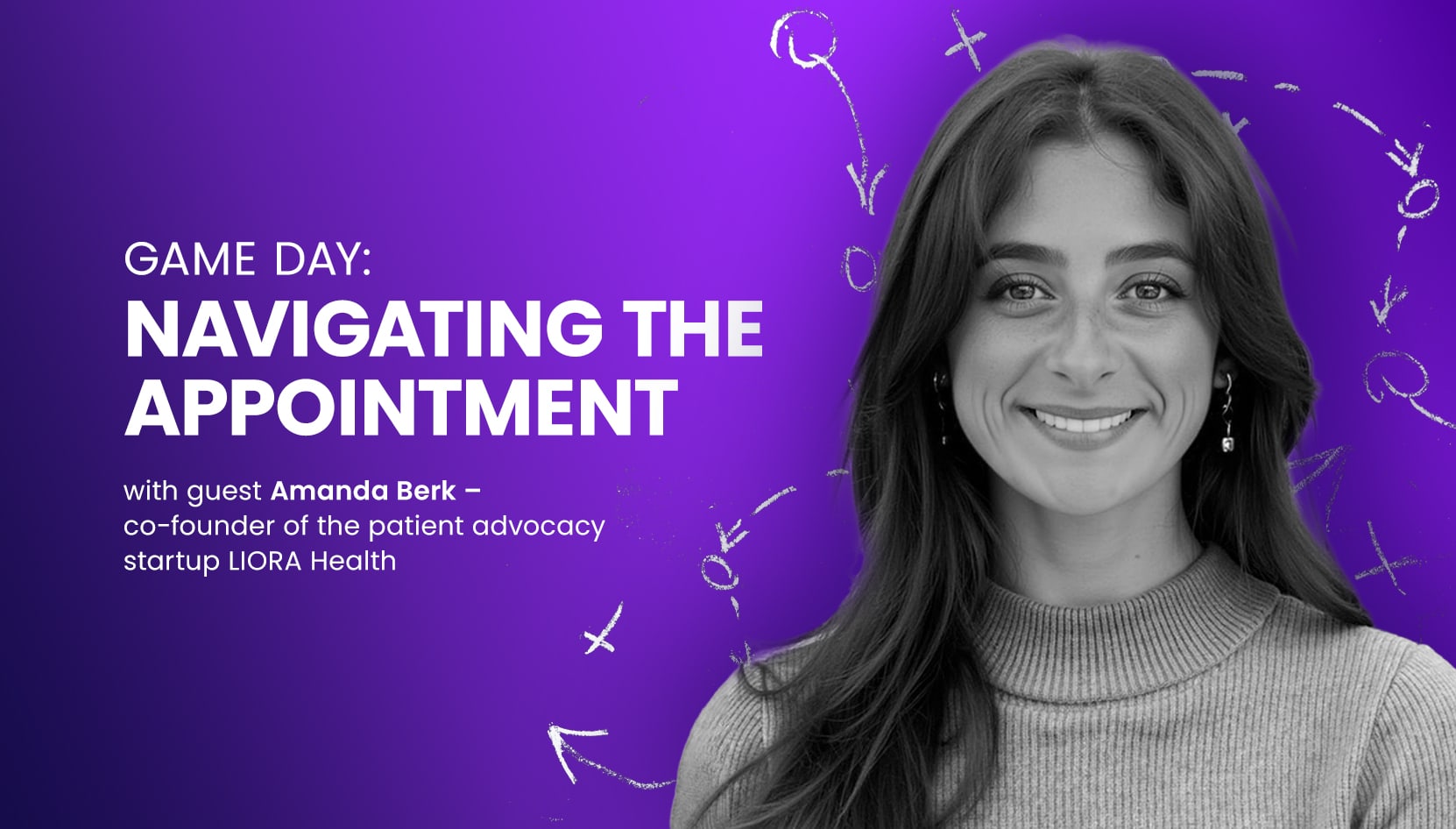
If you are nervous, scared to ask the hard questions, or have a history of shutting down in the exam room, you are not alone. This is an experience many women dread, but it is one we can take control of. In this episode, Amanda Berk, co-founder of the patient advocacy startup LIORA Health, coaches us through navigating the exam room. She breaks down why your 15-minute slot must be prioritized for your goals, how an advocate acts as your ultimate “wingwoman,” and the specific phrases you can use to redirect a distracted clinician and have your lived experience taken seriously.
Amanda Berk (00:03)
This is the time that you are paying for and you deserve to take up space in that room. You are the expert in your own body and that is true. You are the expert in your lived experience. There are respectful ways to push back.
Priya Bathija (00:19)
It’s game day. Bright lights, shields up, your gown flapping in the wind. You’ve got one shot to make sure your doctor hears your concerns and can help you make your game plan. But you’re nervous. Your palms are sweaty. You’ve got a list of questions locked and loaded, but you’re still worried you might miss something. Maybe you have a history of deferring to the doctor when you’re nervous, or you’re too afraid to ask the hard questions.
Or you’re just scared to tell them what you know you need. This is an experience many women dread. But it’s also one we can take control of with the right prep.
I’m Priya Bathija, and this is the Women’s Health Playbook. Together, we’re going to make healthcare just a little bit easier. Because right now, navigating the U.S. healthcare system, especially as a woman, is like playing a game. Except you don’t know the rules. The instructions are written in a language you don’t speak, and the stakes are your life.
Today’s play, Navigating That Doctor’s Appointment You’ve Been Preparing For. Our coach today is Amanda Berk.
Amanda Berk (01:35)
So I’ve spent most of my life obsessed with the healthcare space. I was a long time consumer of it. I’m now a student of it, ⁓ maybe a future provider of it.
Priya Bathija (01:46)
Amanda says she’s no stranger to the complexity of women’s health.
Amanda Berk (01:50)
I grew up in a household of all women, two sisters, a mom and a very supportive girl dad. And women’s health topics were just always talked about at the dinner table. Periods were in taboo.
Priya Bathija (02:01)
She says the very first book she can remember reading was The Care and Keeping of You, the body book for girls, written of course by American Girl. Great book. And she says she feels like she grew up in doctor’s appointments.
Amanda Berk (02:16)
Personally, I’ve navigated chronic health issues from thyroid disease to motor tic disorders to depression, chronic migraines for like most of my life. And the biggest lesson that I feel like I took from all of these, the symptoms, the treatments, the specialists, it was all in my head and it was like, how do I translate this and share it with those who are trying to help me? And I realized like once I found the right support, it was so much easier to navigate. I felt so much less overwhelmed.
Priya Bathija (02:46)
Amanda wanted to use that understanding to help others. During COVID, she graduated from Vanderbilt and started her career in healthcare communications. She quickly realized she wanted to delve even deeper into healthcare.
Amanda Berk (03:00)
I’m currently in graduate school pursuing a dual masters in social work and public health.
Priya Bathija (03:05)
At the same time, she’s also an entrepreneur.
Amanda Berk (03:08)
And that’s what I’m gonna be talking a lot about today with what led me to co-found a patient advocacy startup called Liora with my cousin. And our goal was really to ensure that no woman goes through the healthcare system by herself, adapting that doula model into comprehensive women’s healthcare, especially for women with chronic health conditions.
Priya Bathija (03:30)
Amanda’s gonna walk us through something she’s done many, many times. The doctor’s appointment.
She talks us through the importance of following through with your pregame prep, how a patient advocate, whether a pro or just a friend, can help you nail the play, and why the notes you take will be your best wingwoman.
Amanda, thank you so much for joining us on the Women’s Health Playbook.
Amanda Berk (04:01)
Thank you.
I’m flattered. I’m really, really honored to be here. Really quick, huge fan of your work, Priya. And when you asked me to be on the pod, I was super honored. I love your Friday hopes rolls on LinkedIn. I’m really happy to be on this podcast, especially this episode, and we’ll get to why.
Priya Bathija (04:16)
Amanda, let’s jump into the exam room. The patient has her agenda. She’s pulled together her family history, medical records, wearable data, symptoms if she’s there for an acute problem, medication, her lifestyle, habits. She’s got it all put together and she has a list of questions she wants to ask her doctor. What does she do now that she’s at her doctor’s appointment?
Amanda Berk (04:42)
First of all, that’s great. Preparation is everything. Preparation is amazing. It’s fantastic. That’s all been compiled. But obviously, you can’t go through all of that in your appointment. That’s often 15 minutes. So it’s really about prioritizing, something that took a while for me to learn and something that we’re teaching now. But it’s really just about what are you going to this appointment for and what are you hoping to get out of it. And that’s kind of like the thought that will help you.
better organize your paperwork beforehand, but also while you’re in that room. I mean, something at Liora that we do is it’s called a summary sheet, but essentially it’s about what are your most pressing issues at the top? Maybe it’s debilitating cramps, or in my case, horrible headaches, constant fatigue, not just symptoms, but also like the way that they impact your daily life and that we keep in our head and we often forget, put them on paper. Not every single one of them that you have for every single
body part, but like really for what you’re specifically coming to that appointment for. And then like I want to really stress the importance of goal setting. Smart goals, know, goals that we do in any setting. Why do we do them in like our corporate jobs? Why do we set goals, you know, in the beginning of the new year, but we don’t set goals going into each appointment. Obviously your goal is I want to feel better. I want to be less sick, less tired. I don’t want to wake up for me feeling like I took six tequila shots last night every time I wake up because I would just have chronic headaches.
And so these goals should be really tangible. Are you looking for clarity on your diagnosis? Are you looking for specific treatment options or changes to your medication? Testing or imaging? Is this a second opinion so you want validation or do you want guidance on next steps? So really like those are specific, more honed in goals of like, we’ll probably get to this later, but when you leave that appointment, you wanna recheck that list of goals. Did you accomplish that goal or do you know who you need to go to next to accomplish that goal?
and you can’t cover everything.
Priya Bathija (06:39)
So this time in the exam room, even though it’s limited, it is also your opportunity to build a relationship with your physician. What should women remember in that moment as they’re trying to build that relationship?
Amanda Berk (06:56)
I love that you asked this question. And I’ve had the privilege of talking to so many clinicians and the fact that our system works in silos and we don’t understand how to patients talking to payers, talking to providers, talking to politicians, you know, it’s all about this gap in communication. But I just want to like start with clinicians aren’t evil. They get into medicine to help people.
It’s the system that makes it really, really hard for them to do that. It sounds so simple, but it’s such an important mindset to know that they are on your team, but they are also strapped. Just like how we as patients, we want to be seen, we want to be heard, so do clinicians, and they are struggling on this too. I mean, it’s really hard when you’ve been dismissed, you’ve been pushed around. I can go on and on talking about the experiences that women have in the healthcare space, but…
I do want to kind of defend clinicians here and just let you know, like they are trying their best. And I also think that because they want to help you, you can be vulnerable and kind of level set with them at the beginning saying like, here’s where I’ve been, here’s where I’m at, I’m exhausted, I’m struggling, I’ve had doctors in the past tell me it’s just anxiety or something. And say what you need them to understand. We can’t always assume that they understand the experiences that you’ve had in the past. Like I wouldn’t come in initially
trauma dumping on your clinician on what happened in the past, but you can be honest with them about the experiences that you’ve had and what you’re looking for them for help with. And I think that it just sets the tone for a less defensive appointment.
Priya Bathija (08:33)
Yeah, I love that. And I think it goes back to what you said in response to the last question, right? Explaining your experience, but also clearly framing the things that you want to talk about within that 15-minute appointment.
Amanda Berk (08:48)
Yeah, and I will say like the importance of also coming with your questions, but also letting them lead with those questions, like letting them lead the appointment ⁓ after you initially state your goals, you state what you’ve been through in the past, and having your question sheet to double check if something hasn’t been brought up yet.
Priya Bathija (09:05)
Yep, absolutely. So at Liora Health, it’s all about having a patient advocate with you through your journey. Can you talk about how that works and why it’s so important to bring along an advocate like you offer through Liora or a friend or family member to your appointment? How can that help and what role does that person play?
Amanda Berk (09:29)
Yeah, and I will say the model of Liora and the idea of bringing an advocate started with me bringing my sisters to my appointments, my cousin bringing her mom to her appointments. An advocate doesn’t have to be someone with healthcare knowledge. It could be a loved one, a boyfriend, someone like that. It goes back to you did all the prep work. You feel good. You’ve been sitting in that exam room. You’re waiting. Actually, you don’t feel great. You’ve been feeling bad. And the doctor comes in finally, asks you how you are, and you say, I’m okay.
And maybe you feel okay in that moment, but like yesterday, you were curled up in a ball. You were sobbing in pain for hours. And we go into people pleaser mode when we’re in the appointment with our doctor. And obviously it’s because we want them to like us. We want them to help us. But we go into shutdown. We go into people pleaser mode. And oftentimes it is just simply so helpful to have another person there who’s seen you go through what you’re going through, who you’ve debriefed with before, who can say, like, hey, Amanda.
We actually talked about, remember yesterday when you were kind of like reminding you and helping you get back on track, on that note, really important to in advance discuss with whoever your advocate is what you want their role to be in that appointment. I think something that’s so underratedly helpful that we’ve found with our advocates that is one of the most requested things versus, you know, it’s super important for someone to chime in and help you get back like, we asked this question. let’s talk about like.
We wanted to know, this impact XYZ? But note taking, someone there so that you can be fully present, listening to your clinician, having rapport, and someone is there taking notes for you. That is so impactful.
Priya Bathija (11:14)
You know, we may not think about doing this, but having that conversation with the person that is going with us to an appointment to say, this is what I’m going to be focused on. This is what you’re going to be focused on. And I love the idea that they would take notes so that you could be there and hear your own thoughts and the thoughts of what your clinician is sharing with you and not have to worry about, did I miss something? Because you know that that person is jotting it down.
Amanda Berk (11:42)
And I do want to say on this, when you think of note taking, there’s a lot of ambient AI. I absolutely see a place for AI in health care, AI in even patient advocacy work. But realistically, you’re in that appointment. What are you going to be talking to a chat bot who’s then responding? But then you’re looking at your phone, and then you have to see how that respond. There is nothing that we’ve realized there is nothing that beats a human that is there with you, that has prepped with you. And I think.
We need to humanize healthcare in this time.
Priya Bathija (12:18)
Hey, it’s Priya. I just wanted to pop in here and encourage you to send this episode to a friend. The information we’re sharing here is so valuable, and it’s how we help each other get the best care possible as women in America. So hit the share button on whatever app you’re listening on. Send it to your daughter, sister, aunt, mother, a coworker, or honestly, send it to every girl dad you know, because the more we all know, the better healthcare will be for everyone. Okay.
Back to the play. So sometimes your physician may be a little distracted, may not be listening when you set out your parameters for the appointment, or they may not be receptive to questions ⁓ that you ask. How can you navigate that situation?
Amanda Berk (13:10)
That’s tough. Been there. I would like to say I’d like to assume positive intent at first because we do know they have a lot of charting to do. They have a lot on them. so realistically, if they’re looking at their screen, they could totally be like, it’s awkward where the computer is. Like their back has to be to you. Then they have to turn. Then they have to get it all down. So I would assume positive intent at first. Then what I would do that has really helped me, and it sounds really simple, is I would take a deep breath.
And I would just respectfully redirect. I mean, the word empowering gets thrown around so much, but like what we try to do is empower a patient to know that this is the time that you are paying for and you deserve to take up space in that room. There’s always like the, are the expert in your own body. And that is true. You are the expert in your lived experience. They could be the expert in the medicine, the expert in treatment. And I think that sometimes this term could be used to kind of weaponize clinicians.
But it is really true. There are respectful ways to push back and have your own lived experience shine in that room because you are the only one who understands it. And a clinician, even research, will never tell them what you can tell them.
Priya Bathija (14:24)
that work? How does that redirect work? Are there phrases that a patient can use to get the conversation back on track?
Amanda Berk (14:33)
This is why having questions listed out or goals listed out are super, super helpful because in that moment, it is really, really frazzling. We kind of black out. I think everyone’s had that kind of, I feel like I’m a pretty health literate person. It happens to me very, very often, especially if something new comes up. Even if we’re not talking about a distracted clinician, we’re talking about like a new potential differential diagnosis that like really throws you for a loop. You’ve got to take that breath, go back to your piece of paper or it’s on your phone and just be like, okay.
Is this on track, which I would say is another reason why having an advocate there is so important, ⁓ to help you kind of make the most of the limited resources that you have in that room at that exact time?
Priya Bathija (15:18)
Yeah, so I know that I’ve been in that situation, right, where I have come with a list of questions. I’ve come with an explanation of my medical history and why I’m there. And the doctor has refused to believe anything that I have offered up as my past. And so having that ability in the moment to do what you said, which is to take a deep breath, to go back to your list and to say, well, I was really hoping
to cover A, B, and C, can we go back to that? Because I don’t feel like I have gotten the information I needed or was hoping to get during this visit. Something like that could probably help in that redirection of a physician. But it’s not easy. What other best practices do you think patients need to know before that appointment?
especially if they’ve looked up things on AI or Google and they want to ask questions about that. What can they do so that they’ll be taken seriously, that they don’t offend a clinician, and that the things that they’ve found can be addressed in a meaningful way?
Amanda Berk (16:36)
Yeah, I mean, we live in a time that is different than I think any other clinician or any time in the healthcare space in terms of the access to information that we as consumers have. And it’s amazing, but there’s also a lot of noise out there and it’s all about parceling through misinformation. What’s real? What’s helpful? What’s not? But ⁓ I think it’s great to do your own research. Speaking of AI, I would say the number one platform that I hear of most is I saw this on TikTok and I think I have this now.
And it can be really helpful. Like for example, you might’ve seen these pelvic pain patches on TikTok that genuinely help with symptom management that your clinician doesn’t recommend and didn’t even know about. So like it is helpful and it’s gonna happen inevitably. So don’t stop yourself from doing that research, but as you asked, how do you bring it up in the appointment? And I’d say the key, don’t hide that you did the research, but also don’t propose it as the only solution. ⁓ It’s really about like how you bring it up and how you say it.
offer an example phrase which is like, through my own research, I came across, in same example, these patches. Is this something that you’d recommend? Is this something that you have offered to other patients in the past? So I don’t want to say like stroking their ego too much, but like taking what you learned, but then asking for their clinical expertise on
Priya Bathija (17:57)
And it’s sort of a kinder ask, right? It’s, have found this. I think it sounds good, but I do defer to you and your knowledge and your expertise in this space. And I think that’s a really great way to build that relationship and the two-way conversation.
Amanda Berk (18:15)
I’d say this goes back to the goals that we talked about earlier, like really looking back at what you outlined before you entered and make sure that you were able to get the answers you were looking for. And if you’re not, you can ask them, who else can I go to or would you recommend I see to get these answers or tests done? If you can’t think of that in the moment, I would say a really helpful quick ask is how can I best get in touch with you in the future? Is it through portal messages? Is it through email, through calls?
I would say setting those kind of guardrails in advance are very, very helpful and will actually show a lot of respect that you’re giving to the clinician that they’ll hopefully get back to you.
Priya Bathija (18:56)
So anything else you’d like to add that we haven’t covered yet today?
Amanda Berk (19:02)
Yeah, one thing that I found incredibly helpful if you do not have an advocate with you or a person in the room with you is to empower people to ask, key is ask, to record their appointments with audio. And ask is very key because there are different laws in different states, not just different laws, but also different clinicians have different comfort levels with it because it can be used against them in the court of law if something were to come up.
I will say more often than not at my appointments, clinicians have been very, very open to me audio recording their appointment, especially if I just start with kind of that candid statement at the beginning. And I say, like I’ve said, I tend to get really overwhelmed in these appointments and I really value everything you’re saying. I want to be present. Would you mind if I recorded the audio just for myself so I can go back and review what we talked about? And I’ve had clinicians light up.
when I say this, because they want adherence too. They don’t want to repeat. They don’t want the same patient coming back in the portal asking the questions that you already went over or questioning the treatment protocol that they already went over. And then they have to add more time in their charting. Like, it’s a win-win, but it is also a new territory for clinicians that we have to understand is Dicey. And also, there’s obviously a lot of AI transcription apps out there you can use. You can look into them. I just use voice memos.
and I’ll figure out later on what to put it into to transcribe and to summarize for me. But like, they don’t have to think about it. I just press it and I’m there in that appointment.
Priya Bathija (20:43)
So what other tips or tools would you offer to women as they enter into the exam room?
Amanda Berk (20:50)
One thing I did want to bring up when it came to what questions to ask and something that’s really important in women’s health in general is asking early and often about how this, whatever this is, will impact my fertility. I will say whether it is the diagnosis you’re discussing or a new treatment or medication that’s being offered, even if it doesn’t feel related, just ask because it is so, I mean, an example of I was
I need to go on a statin recently. And that was from a clinician that didn’t listen to me, didn’t look at my history. I’m not going on that statin. But then I went for a second opinion. He was like, whoa, fertility. So it might not even be in the top of their mind, but it should be on top of your mind to ask about if you’re of a certain age.
Priya Bathija (21:37)
Yeah, no, I mean, if you’re childbearing age and that is something that you plan to do, have children or you want to do, that’s a really, really important question. So thank you for raising that. think that’s a really, really important point. Well, Amanda, thank you so much for being here to break down the exam room for our audience. And that’s a wrap on this episode of the Women’s Health Playbook. Thank you.
Amanda Berk (22:03)
Thank so much, this was awesome.
Priya Bathija (22:13)
Thank you for listening to the Women’s Health Playbook. We hope this breakdown helps you receive better care as a woman in the United States. If you want to dive deeper into the tactics and resources we discussed today, you can find those in the show notes for this episode. The Women’s Health Playbook is brought to you by Nyoo Health. That’s my company. We help people and organizations reimagine how they prioritize and deliver care for women. For more information on the work we do, visit newhealth.com.
That’s N-Y-O-O health.com. And for more plays you can use to take control of your health and healthcare journey, visit us at womenshealthplaybook.com. I’m Priya Bathija. Catch the next episode of the Women’s Health Playbook right now in your favorite podcasting app. And we hope you’ll share this episode with a friend because the more we all know, the better healthcare will be for everyone.
This is the time that you are paying for and you deserve to take up space in that room. You are the expert in your own body and that is true. You are the expert in your lived experience. There are respectful ways to push back.
Priya Bathija (00:19)
It’s game day. Bright lights, shields up, your gown flapping in the wind. You’ve got one shot to make sure your doctor hears your concerns and can help you make your game plan. But you’re nervous. Your palms are sweaty. You’ve got a list of questions locked and loaded, but you’re still worried you might miss something. Maybe you have a history of deferring to the doctor when you’re nervous, or you’re too afraid to ask the hard questions.
Or you’re just scared to tell them what you know you need. This is an experience many women dread. But it’s also one we can take control of with the right prep.
I’m Priya Bathija, and this is the Women’s Health Playbook. Together, we’re going to make healthcare just a little bit easier. Because right now, navigating the U.S. healthcare system, especially as a woman, is like playing a game. Except you don’t know the rules. The instructions are written in a language you don’t speak, and the stakes are your life.
Today’s play, Navigating That Doctor’s Appointment You’ve Been Preparing For. Our coach today is Amanda Berk.
Amanda Berk (01:35)
So I’ve spent most of my life obsessed with the healthcare space. I was a long time consumer of it. I’m now a student of it, ⁓ maybe a future provider of it.
Priya Bathija (01:46)
Amanda says she’s no stranger to the complexity of women’s health.
Amanda Berk (01:50)
I grew up in a household of all women, two sisters, a mom and a very supportive girl dad. And women’s health topics were just always talked about at the dinner table. Periods were in taboo.
Priya Bathija (02:01)
She says the very first book she can remember reading was The Care and Keeping of You, the body book for girls, written of course by American Girl. Great book. And she says she feels like she grew up in doctor’s appointments.
Amanda Berk (02:16)
Personally, I’ve navigated chronic health issues from thyroid disease to motor tic disorders to depression, chronic migraines for like most of my life. And the biggest lesson that I feel like I took from all of these, the symptoms, the treatments, the specialists, it was all in my head and it was like, how do I translate this and share it with those who are trying to help me? And I realized like once I found the right support, it was so much easier to navigate. I felt so much less overwhelmed.
Priya Bathija (02:46)
Amanda wanted to use that understanding to help others. During COVID, she graduated from Vanderbilt and started her career in healthcare communications. She quickly realized she wanted to delve even deeper into healthcare.
Amanda Berk (03:00)
I’m currently in graduate school pursuing a dual masters in social work and public health.
Priya Bathija (03:05)
At the same time, she’s also an entrepreneur.
Amanda Berk (03:08)
And that’s what I’m gonna be talking a lot about today with what led me to co-found a patient advocacy startup called Liora with my cousin. And our goal was really to ensure that no woman goes through the healthcare system by herself, adapting that doula model into comprehensive women’s healthcare, especially for women with chronic health conditions.
Priya Bathija (03:30)
Amanda’s gonna walk us through something she’s done many, many times. The doctor’s appointment.
She talks us through the importance of following through with your pregame prep, how a patient advocate, whether a pro or just a friend, can help you nail the play, and why the notes you take will be your best wingwoman.
Amanda, thank you so much for joining us on the Women’s Health Playbook.
Amanda Berk (04:01)
Thank you.
I’m flattered. I’m really, really honored to be here. Really quick, huge fan of your work, Priya. And when you asked me to be on the pod, I was super honored. I love your Friday hopes rolls on LinkedIn. I’m really happy to be on this podcast, especially this episode, and we’ll get to why.
Priya Bathija (04:16)
Amanda, let’s jump into the exam room. The patient has her agenda. She’s pulled together her family history, medical records, wearable data, symptoms if she’s there for an acute problem, medication, her lifestyle, habits. She’s got it all put together and she has a list of questions she wants to ask her doctor. What does she do now that she’s at her doctor’s appointment?
Amanda Berk (04:42)
First of all, that’s great. Preparation is everything. Preparation is amazing. It’s fantastic. That’s all been compiled. But obviously, you can’t go through all of that in your appointment. That’s often 15 minutes. So it’s really about prioritizing, something that took a while for me to learn and something that we’re teaching now. But it’s really just about what are you going to this appointment for and what are you hoping to get out of it. And that’s kind of like the thought that will help you.
better organize your paperwork beforehand, but also while you’re in that room. I mean, something at Liora that we do is it’s called a summary sheet, but essentially it’s about what are your most pressing issues at the top? Maybe it’s debilitating cramps, or in my case, horrible headaches, constant fatigue, not just symptoms, but also like the way that they impact your daily life and that we keep in our head and we often forget, put them on paper. Not every single one of them that you have for every single
body part, but like really for what you’re specifically coming to that appointment for. And then like I want to really stress the importance of goal setting. Smart goals, know, goals that we do in any setting. Why do we do them in like our corporate jobs? Why do we set goals, you know, in the beginning of the new year, but we don’t set goals going into each appointment. Obviously your goal is I want to feel better. I want to be less sick, less tired. I don’t want to wake up for me feeling like I took six tequila shots last night every time I wake up because I would just have chronic headaches.
And so these goals should be really tangible. Are you looking for clarity on your diagnosis? Are you looking for specific treatment options or changes to your medication? Testing or imaging? Is this a second opinion so you want validation or do you want guidance on next steps? So really like those are specific, more honed in goals of like, we’ll probably get to this later, but when you leave that appointment, you wanna recheck that list of goals. Did you accomplish that goal or do you know who you need to go to next to accomplish that goal?
and you can’t cover everything.
Priya Bathija (06:39)
So this time in the exam room, even though it’s limited, it is also your opportunity to build a relationship with your physician. What should women remember in that moment as they’re trying to build that relationship?
Amanda Berk (06:56)
I love that you asked this question. And I’ve had the privilege of talking to so many clinicians and the fact that our system works in silos and we don’t understand how to patients talking to payers, talking to providers, talking to politicians, you know, it’s all about this gap in communication. But I just want to like start with clinicians aren’t evil. They get into medicine to help people.
It’s the system that makes it really, really hard for them to do that. It sounds so simple, but it’s such an important mindset to know that they are on your team, but they are also strapped. Just like how we as patients, we want to be seen, we want to be heard, so do clinicians, and they are struggling on this too. I mean, it’s really hard when you’ve been dismissed, you’ve been pushed around. I can go on and on talking about the experiences that women have in the healthcare space, but…
I do want to kind of defend clinicians here and just let you know, like they are trying their best. And I also think that because they want to help you, you can be vulnerable and kind of level set with them at the beginning saying like, here’s where I’ve been, here’s where I’m at, I’m exhausted, I’m struggling, I’ve had doctors in the past tell me it’s just anxiety or something. And say what you need them to understand. We can’t always assume that they understand the experiences that you’ve had in the past. Like I wouldn’t come in initially
trauma dumping on your clinician on what happened in the past, but you can be honest with them about the experiences that you’ve had and what you’re looking for them for help with. And I think that it just sets the tone for a less defensive appointment.
Priya Bathija (08:33)
Yeah, I love that. And I think it goes back to what you said in response to the last question, right? Explaining your experience, but also clearly framing the things that you want to talk about within that 15-minute appointment.
Amanda Berk (08:48)
Yeah, and I will say like the importance of also coming with your questions, but also letting them lead with those questions, like letting them lead the appointment ⁓ after you initially state your goals, you state what you’ve been through in the past, and having your question sheet to double check if something hasn’t been brought up yet.
Priya Bathija (09:05)
Yep, absolutely. So at Liora Health, it’s all about having a patient advocate with you through your journey. Can you talk about how that works and why it’s so important to bring along an advocate like you offer through Liora or a friend or family member to your appointment? How can that help and what role does that person play?
Amanda Berk (09:29)
Yeah, and I will say the model of Liora and the idea of bringing an advocate started with me bringing my sisters to my appointments, my cousin bringing her mom to her appointments. An advocate doesn’t have to be someone with healthcare knowledge. It could be a loved one, a boyfriend, someone like that. It goes back to you did all the prep work. You feel good. You’ve been sitting in that exam room. You’re waiting. Actually, you don’t feel great. You’ve been feeling bad. And the doctor comes in finally, asks you how you are, and you say, I’m okay.
And maybe you feel okay in that moment, but like yesterday, you were curled up in a ball. You were sobbing in pain for hours. And we go into people pleaser mode when we’re in the appointment with our doctor. And obviously it’s because we want them to like us. We want them to help us. But we go into shutdown. We go into people pleaser mode. And oftentimes it is just simply so helpful to have another person there who’s seen you go through what you’re going through, who you’ve debriefed with before, who can say, like, hey, Amanda.
We actually talked about, remember yesterday when you were kind of like reminding you and helping you get back on track, on that note, really important to in advance discuss with whoever your advocate is what you want their role to be in that appointment. I think something that’s so underratedly helpful that we’ve found with our advocates that is one of the most requested things versus, you know, it’s super important for someone to chime in and help you get back like, we asked this question. let’s talk about like.
We wanted to know, this impact XYZ? But note taking, someone there so that you can be fully present, listening to your clinician, having rapport, and someone is there taking notes for you. That is so impactful.
Priya Bathija (11:14)
You know, we may not think about doing this, but having that conversation with the person that is going with us to an appointment to say, this is what I’m going to be focused on. This is what you’re going to be focused on. And I love the idea that they would take notes so that you could be there and hear your own thoughts and the thoughts of what your clinician is sharing with you and not have to worry about, did I miss something? Because you know that that person is jotting it down.
Amanda Berk (11:42)
And I do want to say on this, when you think of note taking, there’s a lot of ambient AI. I absolutely see a place for AI in health care, AI in even patient advocacy work. But realistically, you’re in that appointment. What are you going to be talking to a chat bot who’s then responding? But then you’re looking at your phone, and then you have to see how that respond. There is nothing that we’ve realized there is nothing that beats a human that is there with you, that has prepped with you. And I think.
We need to humanize healthcare in this time.
Priya Bathija (12:18)
Hey, it’s Priya. I just wanted to pop in here and encourage you to send this episode to a friend. The information we’re sharing here is so valuable, and it’s how we help each other get the best care possible as women in America. So hit the share button on whatever app you’re listening on. Send it to your daughter, sister, aunt, mother, a coworker, or honestly, send it to every girl dad you know, because the more we all know, the better healthcare will be for everyone. Okay.
Back to the play. So sometimes your physician may be a little distracted, may not be listening when you set out your parameters for the appointment, or they may not be receptive to questions ⁓ that you ask. How can you navigate that situation?
Amanda Berk (13:10)
That’s tough. Been there. I would like to say I’d like to assume positive intent at first because we do know they have a lot of charting to do. They have a lot on them. so realistically, if they’re looking at their screen, they could totally be like, it’s awkward where the computer is. Like their back has to be to you. Then they have to turn. Then they have to get it all down. So I would assume positive intent at first. Then what I would do that has really helped me, and it sounds really simple, is I would take a deep breath.
And I would just respectfully redirect. I mean, the word empowering gets thrown around so much, but like what we try to do is empower a patient to know that this is the time that you are paying for and you deserve to take up space in that room. There’s always like the, are the expert in your own body. And that is true. You are the expert in your lived experience. They could be the expert in the medicine, the expert in treatment. And I think that sometimes this term could be used to kind of weaponize clinicians.
But it is really true. There are respectful ways to push back and have your own lived experience shine in that room because you are the only one who understands it. And a clinician, even research, will never tell them what you can tell them.
Priya Bathija (14:24)
that work? How does that redirect work? Are there phrases that a patient can use to get the conversation back on track?
Amanda Berk (14:33)
This is why having questions listed out or goals listed out are super, super helpful because in that moment, it is really, really frazzling. We kind of black out. I think everyone’s had that kind of, I feel like I’m a pretty health literate person. It happens to me very, very often, especially if something new comes up. Even if we’re not talking about a distracted clinician, we’re talking about like a new potential differential diagnosis that like really throws you for a loop. You’ve got to take that breath, go back to your piece of paper or it’s on your phone and just be like, okay.
Is this on track, which I would say is another reason why having an advocate there is so important, ⁓ to help you kind of make the most of the limited resources that you have in that room at that exact time?
Priya Bathija (15:18)
Yeah, so I know that I’ve been in that situation, right, where I have come with a list of questions. I’ve come with an explanation of my medical history and why I’m there. And the doctor has refused to believe anything that I have offered up as my past. And so having that ability in the moment to do what you said, which is to take a deep breath, to go back to your list and to say, well, I was really hoping
to cover A, B, and C, can we go back to that? Because I don’t feel like I have gotten the information I needed or was hoping to get during this visit. Something like that could probably help in that redirection of a physician. But it’s not easy. What other best practices do you think patients need to know before that appointment?
especially if they’ve looked up things on AI or Google and they want to ask questions about that. What can they do so that they’ll be taken seriously, that they don’t offend a clinician, and that the things that they’ve found can be addressed in a meaningful way?
Amanda Berk (16:36)
Yeah, I mean, we live in a time that is different than I think any other clinician or any time in the healthcare space in terms of the access to information that we as consumers have. And it’s amazing, but there’s also a lot of noise out there and it’s all about parceling through misinformation. What’s real? What’s helpful? What’s not? But ⁓ I think it’s great to do your own research. Speaking of AI, I would say the number one platform that I hear of most is I saw this on TikTok and I think I have this now.
And it can be really helpful. Like for example, you might’ve seen these pelvic pain patches on TikTok that genuinely help with symptom management that your clinician doesn’t recommend and didn’t even know about. So like it is helpful and it’s gonna happen inevitably. So don’t stop yourself from doing that research, but as you asked, how do you bring it up in the appointment? And I’d say the key, don’t hide that you did the research, but also don’t propose it as the only solution. ⁓ It’s really about like how you bring it up and how you say it.
offer an example phrase which is like, through my own research, I came across, in same example, these patches. Is this something that you’d recommend? Is this something that you have offered to other patients in the past? So I don’t want to say like stroking their ego too much, but like taking what you learned, but then asking for their clinical expertise on
Priya Bathija (17:57)
And it’s sort of a kinder ask, right? It’s, have found this. I think it sounds good, but I do defer to you and your knowledge and your expertise in this space. And I think that’s a really great way to build that relationship and the two-way conversation.
Amanda Berk (18:15)
I’d say this goes back to the goals that we talked about earlier, like really looking back at what you outlined before you entered and make sure that you were able to get the answers you were looking for. And if you’re not, you can ask them, who else can I go to or would you recommend I see to get these answers or tests done? If you can’t think of that in the moment, I would say a really helpful quick ask is how can I best get in touch with you in the future? Is it through portal messages? Is it through email, through calls?
I would say setting those kind of guardrails in advance are very, very helpful and will actually show a lot of respect that you’re giving to the clinician that they’ll hopefully get back to you.
Priya Bathija (18:56)
So anything else you’d like to add that we haven’t covered yet today?
Amanda Berk (19:02)
Yeah, one thing that I found incredibly helpful if you do not have an advocate with you or a person in the room with you is to empower people to ask, key is ask, to record their appointments with audio. And ask is very key because there are different laws in different states, not just different laws, but also different clinicians have different comfort levels with it because it can be used against them in the court of law if something were to come up.
I will say more often than not at my appointments, clinicians have been very, very open to me audio recording their appointment, especially if I just start with kind of that candid statement at the beginning. And I say, like I’ve said, I tend to get really overwhelmed in these appointments and I really value everything you’re saying. I want to be present. Would you mind if I recorded the audio just for myself so I can go back and review what we talked about? And I’ve had clinicians light up.
when I say this, because they want adherence too. They don’t want to repeat. They don’t want the same patient coming back in the portal asking the questions that you already went over or questioning the treatment protocol that they already went over. And then they have to add more time in their charting. Like, it’s a win-win, but it is also a new territory for clinicians that we have to understand is Dicey. And also, there’s obviously a lot of AI transcription apps out there you can use. You can look into them. I just use voice memos.
and I’ll figure out later on what to put it into to transcribe and to summarize for me. But like, they don’t have to think about it. I just press it and I’m there in that appointment.
Priya Bathija (20:43)
So what other tips or tools would you offer to women as they enter into the exam room?
Amanda Berk (20:50)
One thing I did want to bring up when it came to what questions to ask and something that’s really important in women’s health in general is asking early and often about how this, whatever this is, will impact my fertility. I will say whether it is the diagnosis you’re discussing or a new treatment or medication that’s being offered, even if it doesn’t feel related, just ask because it is so, I mean, an example of I was
I need to go on a statin recently. And that was from a clinician that didn’t listen to me, didn’t look at my history. I’m not going on that statin. But then I went for a second opinion. He was like, whoa, fertility. So it might not even be in the top of their mind, but it should be on top of your mind to ask about if you’re of a certain age.
Priya Bathija (21:37)
Yeah, no, I mean, if you’re childbearing age and that is something that you plan to do, have children or you want to do, that’s a really, really important question. So thank you for raising that. think that’s a really, really important point. Well, Amanda, thank you so much for being here to break down the exam room for our audience. And that’s a wrap on this episode of the Women’s Health Playbook. Thank you.
Amanda Berk (22:03)
Thank so much, this was awesome.
Priya Bathija (22:13)
Thank you for listening to the Women’s Health Playbook. We hope this breakdown helps you receive better care as a woman in the United States. If you want to dive deeper into the tactics and resources we discussed today, you can find those in the show notes for this episode. The Women’s Health Playbook is brought to you by Nyoo Health. That’s my company. We help people and organizations reimagine how they prioritize and deliver care for women. For more information on the work we do, visit newhealth.com.
That’s N-Y-O-O health.com. And for more plays you can use to take control of your health and healthcare journey, visit us at womenshealthplaybook.com. I’m Priya Bathija. Catch the next episode of the Women’s Health Playbook right now in your favorite podcasting app. And we hope you’ll share this episode with a friend because the more we all know, the better healthcare will be for everyone.
In this episode, we walk you through these key topics:
- 15-Minute Game Plan: Realistically prioritizing your pressing issues and setting “SMART” goals for what you want to achieve before the appointment.
- Level-Setting the Vibe: Why clinicians aren’t evil (they’re strapped by the system) and how to vulnerably share your history of dismissal to build rapport early.
- The Advocate’s Roster: The vital, note-taking role a friend, family member, or professional advocate plays in keeping you present and accountable (so you don’t just say, “I’m fine”).
- The Redirect: Tactical advice and “audibles” for when a clinician is distracted, dismissive, or looking at their screen, empowering you to “take up space.”
- Bringing “TikTok Research”: How to present your own Google/AI/social media findings without offending the clinician, framing it to ask for their clinical expertise.
- The Fertility Check: Why you must ask “early and often” how new diagnoses or treatments will impact your fertility, regardless of your immediate plans.
The Playbook: “Behind the Clipboard” Checklist
Amanda suggests utilizing these specific plays when in the exam room:
- The Summary Sheet (Prioritize!): Don’t cover everything. Start with your most pressing issues and goals at the top. (Example: debilitation cramps vs. every single body part).
- The “Vulnerable Ask” (For Dismissive History): “Here is where I’ve been. I’m exhausted. I’ve had doctors in the past tell me it’s just anxiety. I need you to understand that, and here’s what I’m looking for help with.”
- The “Deep Breath Redirect” (For Distracted Clinician): If they are on the screen or off track: “I know you have a lot of charting, but can we go back to A, B, and C? I don’t feel I’ve gotten the information I needed.”
- The “Clinical Expertise Ask” (For Research Findings): “Through my own research, I came across [research/treatment/study]. Is this something you have offered to other patients or would recommend?”
- The “Audio Record Request”(The Adherence Play): “I get overwhelmed in these appointments. I value everything you are saying and want to adhere. Do you mind if I audio record just for myself so I can review this later?”
- The Non-Negotiable (Fertility Check): “How will [this diagnosis/this treatment/this medication] impact my fertility?”