

/
RSS Feed
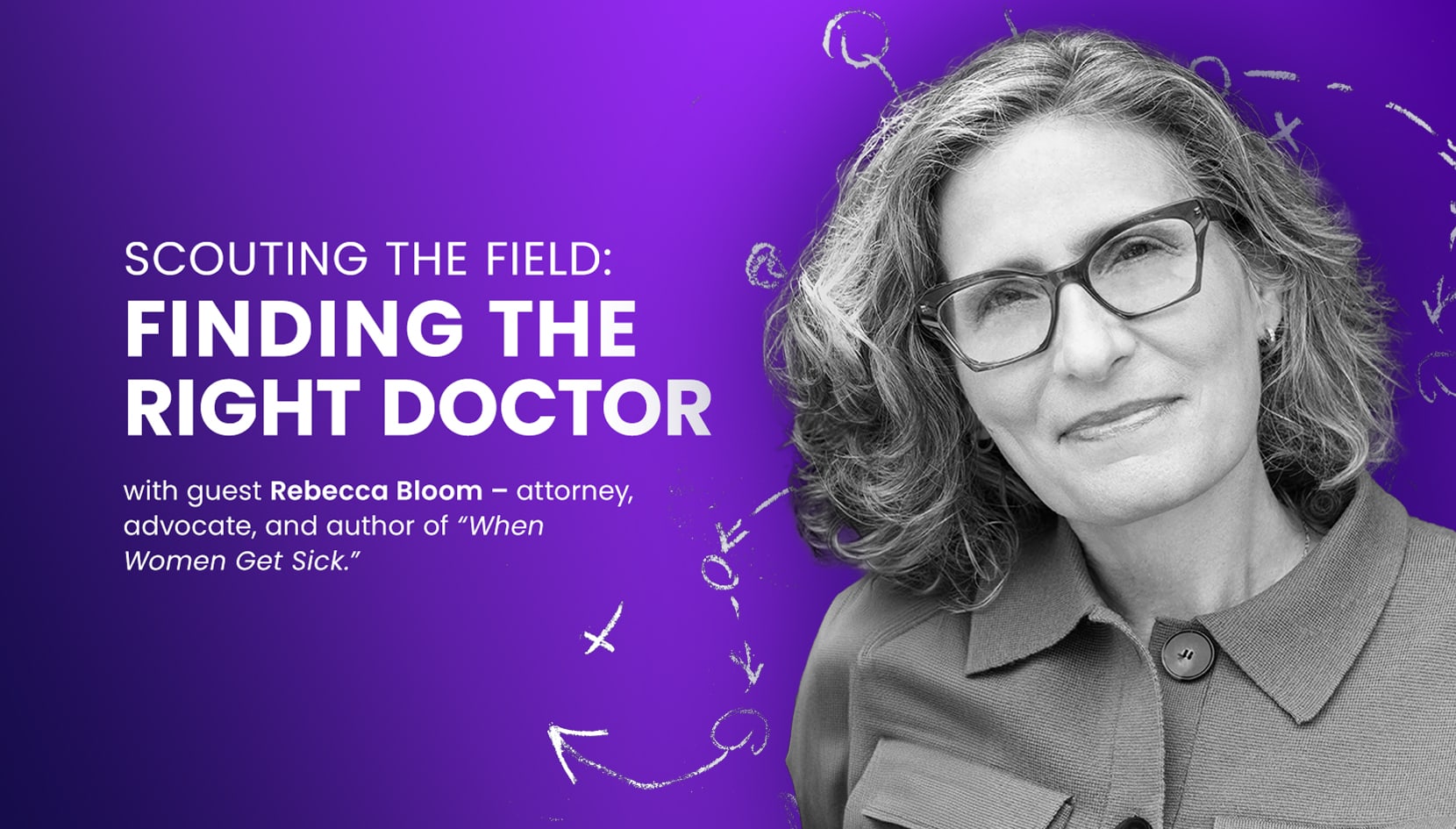
Finding a doctor shouldn’t feel like a full-contact sport, but for women in the U.S. healthcare system, it often does. In this episode, Rebecca Bloom (attorney, advocate, and author of “When Women Get Sick”) helps us break down how to choose the right doctor, what “in-network” really means, and the exact questions to ask before your first appointment. Consider this your step-by-step playbook for finding a physician who advocates for you and passes the vibe check.
Rebecca Bloom (00:00)
Your doctor is your best advocate. You really are partners in Project Healing, right? So trust, respect, and A-plus communication with your doctor means so much to your health journey.
Priya Bathija (00:20)
So you need a doctor. Maybe it’s for you, a new primary care physician, because your old one retired. Or maybe it’s a specialist for you or your sick mother. Maybe you need to find a pediatrician for your new baby. Finding the right doctor can be overwhelming. It’s vulnerable. And honestly, it’s a truly maddening task for women all over America.
In some cases, the options are endless. Other times, you don’t have many choices. The reviews and ratings can be confusing, and your insurance company may be pressuring you to head in their approved direction. And then, once you pick a doctor, you enter into the fray with this raise a racing heart and a mind full of unanswered questions.
Will they be the right fit? How hard are you going to have to work to advocate for yourself or your loved one? Are they going to be available when you need them? Why does trying to get access to good, affordable, and meaningful health care in this country feel like a full contact sport?
Hi, I’m Priya Bathija, and this is the Women’s Health Playbook. Together, we’re going to make healthcare just a little bit easier, because right now, navigating the U.S. healthcare system, especially as a woman, is like playing a game. Except, you don’t know the rules. The instructions are written in a language you don’t speak, and the stakes are your life. Too often, women are left without answers or the outcomes and experiences that they deserve.
The Women’s Health Playbook is here to change that. In each season, we’ll have leading experts give you the plays you’ve never had. And in each episode, they move beyond general advice to deliver actionable tactics and strategies you can use to take control of your health and healthcare journey. In today’s play, we are breaking down your doctor’s appointment. And we’re starting with how you can find a doctor.
Our coach for today is Rebecca Bloom.
Rebecca Bloom (02:35)
I’ve got these strange esoteric ninja skills that can truly help somebody get through this. It shouldn’t take that, but it does take that.
Priya Bathija (02:45)
Rebecca is a former attorney who started her career in employee benefits and compensation. ⁓
Rebecca Bloom (02:50)
I really didn’t know why I was doing that except I wanted to pay off my student loans quickly. And it turned out I learned some incredibly important things about the safety nets that are available to people through the lens of the employer, sure. But you’ve got to go beyond that in order to really understand how somebody moves through any challenge like an illness or anything like that.
Priya Bathija (03:15)
Then, Rebecca’s mom was diagnosed with breast cancer.
Rebecca Bloom (03:19)
I think it’s going to be like putting lasagnas in the freezer and stuff like that. But it turns into, holy cow, there’s a lot of complexity here. What is this diagnosis? What does it mean? Who do I ask? How do I get information? How do I get a second opinion? How do I make sure I’m not getting bills that don’t make sense? How do I navigate that if I do get a bill that doesn’t make sense? How do I smooth this path that is not designed to be easy for a woman who’s going through it?
I realized, holy cow, I actually learned something really valuable.
Priya Bathija (03:52)
Rebecca walked her mom through cancer, and then she volunteered at Bay Area Cancer Connections, where she walked many more women through breast and ovarian cancer treatment.
Rebecca Bloom (04:03)
And so after helping thousands of women, I had also been working a bit as a book coach and an editor and a storytelling coach. And when I saw the direction of things in healthcare in general, and even specifically when it came to women’s health, I thought, this could be a time to share these learnings. This could be a time to link arms with other women who are getting involved in making women’s health better on so many levels and from so many angles.
So I decided to try to get an agent and try to get published. And that’s why I’ve got my book, When Women Get Sick.
Priya Bathija (04:39)
We will link to Rebecca’s book in the show notes. But today, Rebecca’s here to walk us step by step through a really important part of getting healthcare. How do you find a doctor? This is a short interview that is packed full of practical, tried and true actions to make sure that you scout the right doctor for you and that you understand the complexities of a system that make it hard to pinpoint the right clinician.
Plus, Rebecca will arm you with a list of questions to bring to your first appointment. These questions will make sure your doctor passes the vibe check and is ready to be a true teammate in your healthcare journey.
Rebecca, thank you so much for joining us today for the very first episode of the Women’s Health Playbook. I could not think of a better guest to start this off.
Rebecca Bloom (05:35)
Thank you so much for having me, Priya. I’m so excited to have a great conversation with you.
Priya Bathija (05:40)
So let’s jump in and start right at the beginning. How do you find a doctor? What are some of the avenues or pathways you can take as an individual if you are searching for a doctor, whether that’s primary care or specialty care?
Rebecca Bloom (05:55)
So there are a lot of places you can look. There’s ZocDoc. There’s this thing called Doximity, which is like LinkedIn for doctors. These are all really interesting places to do initial research. I kind of think of them as correlative to something like Amazon for books or Expedia for hotels. You know, sometimes they’re just good for finding out who has openings, who takes your insurance.
You know, it can be high level like that. There are ratings there, but I’m not sure if they’re that easy to access or understand or rely upon necessarily, because I don’t really know who writes them. ⁓ But that said, they can just be good for an initial finding of the landscape. Sometimes they will get ⁓ appointments that have been released to them. And so you might have an easier time getting an appointment through, like a ZocDoc.
And it doesn’t hurt to take that if you can’t get one directly, but you got to understand that’s like a third party in a way. And it’s not communication with the doctors or getting to know them at all. On the other hand, it is online and there’s no calling and there’s no waiting. So for me, I think using that for research and maybe for emergencies.
I had a thing where I had super clogged ears. I couldn’t get urgent care to help me because it was too profound of a problem. I needed an ENT in New York City who took my insurance before I got on an airplane a couple of days later. And ZocDoc was amazing for that. I found an ENT who took my insurance and had an appointment and I went and I needed it right then. That was a great use of that.
Priya Bathija (07:50)
Well, and I’ve used ZocDoc once to find a dermatologist when I was living in Chicago, because I had no idea where to even start. I wanted to go to a dermatologist for some white spots on my skin. So it wasn’t like a pure medical condition that I felt comfortable going to my primary care doc and saying, this is what I need a referral for. So ZocDoc was very, very good for that.
Rebecca Bloom (08:15)
It can be sometimes. Another place to look always is go to your insurer. They always will have a website, and they have those find a doctor tools. And they tend to be more up to date than provider websites. Provider websites are wonderful for generally learning about who is on staff, what the doctors specialize in, if you already know.
that in general the system takes your insurance. It might be a great place to start too. But sometimes they’ll list something under a specific doctor and it isn’t true anymore. I have definitely seen that to be the case. So the insurers find a doctor is a better spot to look to make sure you find somebody who actually takes the insurance. But all of this to my mind is research because there’s really no substitute for finding out from a friend or a colleague.
or a doctor that is already treating you or that you happen to know who you trust, that’s still gonna be the gold standard for finding the really right doctor for you.
Priya Bathija (09:20)
say you find this doctor or you find a couple and you want to vet them a little bit further, how can you make sure that their credentials are verified, that they have good quality ratings? Where can you take a look at some patient reviews? What should you do to sort of vet the doctor?
Rebecca Bloom (09:40)
So there are quite a few websites out there that have doctor reviews. But we talked about this a little bit before. Who’s writing on them? That’s always tricky. So I say, look at all of them. Look at the ratings on the provider site, on the insurer site, on ZocDoc. But all of that said, be circumspect. We all know what the Yelp effect is. You don’t write something unless it was terrible.
or it was super great. And we also know that doctors ask patients to fill out surveys all the time and medical systems. So it’s a little bit of a game. That’s why I say be circumspect. A doctor that I interviewed for my book said to me, it’s like I’m a Hilton and I’m going to get yelled at by my boss if I didn’t do a good job cleaning the sheets in the room. And that might be somebody who’s not the most accurate reporter who wrote that, but it’s going to affect me.
You know, and so even to the point where doctors have told me this can have a chilling effect on the way they write their notes. They might not want to write that a patient was really animated or upset or distressed because they might be worried that the patient’s going to read that and think, they think I’m crazy. And then they’re going to write a bad review. This is a tricky bit. That’s why I say the Yelp effect, right? So going back to that, do it, look at it.
Don’t overreact to anything too great or too terrible. Think about it like when you get a quote to get your fence fixed. Don’t maybe take the most expensive. Don’t maybe take the cheapest. Try to gravitate towards the middle and think about it like that.
Priya Bathija (11:24)
Yeah, and I think about it too in the context of like picking a restaurant and actually seeing the Yelp reviews where there may be a couple really horrible ones, but for the most part, they’re really, really good. And so as you’re doing that and gravitating towards the middle, I think you have to take some of the outliers out of the equation and look at it more objectively.
Rebecca Bloom (11:47)
think so too. I mean, we’re living in this world where everyone thinks that everyone else cares so much what they think because business has created this idea that feedback is so valuable. And it is valuable, but at the same time, when there are these open forums for people to say what they think, you can see how people get emboldened in strange ways sometimes. So you just have to think for that.
Priya Bathija (12:13)
But you just want to throw out Reddit there too, because I feel like a lot of people are utilizing Reddit to get recommendations not only for doctors or what treatment they need, but just for everything in their lives. And I feel like taking that similar approach that you would take to any other rating site that exists for doctors, it’s wise to do the same thing for Reddit.
Rebecca Bloom (12:38)
Yeah, I think we’re saying moderation.
Priya Bathija (12:44)
Hey, it’s Priya. I just wanted to pop in here and encourage you to send this episode to a friend. The information we’re sharing here is so valuable, and it’s how we help each other get the best care possible as women in America. So hit the share button on whatever app you’re listening on. Send it to your daughter, sister, aunt, mother, a coworker, or honestly, send it to every girl dad you know, because the more we all know, the better healthcare will be for everyone. Okay.
to the play.
Another thing, and you touched on this a bit when you talked about potentially finding a doctor through your insurers website. One of the things that can be prohibitive is if a doctor you want to see is not in your network. So can you just do a quick breakdown of the difference between in network and out of network?
Rebecca Bloom (13:36)
Definitely. So this is all about insurance contracts. And it can change, by the way. In fact, it changes every year in a somewhat predictable way. Major health systems usually kick out somebody almost every year. Probably it’s because they’re having a bad experience with reimbursements, I would imagine. Or they just get into contract negotiations. But major health systems make contracts with insurers in order to have them be in network.
That’s how it works. So this means essentially that these insurers cover a percentage of care that’s pretty high. Maybe 70%, maybe 80%, maybe more. Even 100 % for certain things, preventative care and other stuff too, right? ⁓ Depends on the facts of the plan and usually the cost of the plan is what governs that. Out of network means that your insurance carrier does not have a contract.
with that system or that provider. So it means you hear people say, your provider doesn’t take that coverage. That’s the way people say it, right? But even then, there can be some reimbursement. It just might be less. So here’s a real life way that you can think about this. If you want or need a second opinion, that’s a good place to consider going out of network if you have to, because it’s a contained expense.
And it might literally be worth it to pay for those brains because you’re not hooking yourself up to a machine. You’re not having a big surgery or something like that that’s going to trigger all these other costs and the waterfall of expense. might just be worth it to go, hmm, if I can only get 40 % or 50 % of that person’s basically hourly rate, I really want to know what that person thinks might be worth it.
Priya Bathija (15:26)
Yeah, and it could help you feel much better about the doctor who isn’t network who made a recommendation about your treatment.
Rebecca Bloom (15:33)
very much so, and that happens so often.
Priya Bathija (15:36)
That’s a really good tip. So we talked about in network, out of network, we talked about quality ratings, credentials. What other factors should we be thinking about when we select a physician?
Rebecca Bloom (15:50)
Yeah, so this isn’t just my opinion, really. This is based on the experience of helping women walk through this. And here’s the things I see. Location is a huge deal, especially if you’re looking at something chronic or difficult and stressful. People go other places to get treated, and there are, like the American Cancer Society has Hope Lodge where you can stay if you’re being treated in different.
places where they have that. You can have things like that. But in general, location really does matter because logistics matter so much for somebody when they’re on a health journey. Affiliation with the hospital or health system that you trust is a really big deal too. If you know that there’s a team of people that you want to be treated by, you got to think, well, I need to pick this point person who works with those folks. And that’s about cooperation, but it’s also practical.
Virtual capacity is a thing that some people are starting to care a lot about. There are some doctors that still don’t do any telehealth at all. And for some folks, let’s say we’ve got weather and it’s winter and you’re having a health journey and you really just want to have that quick appointment with your doctor. It’s nice to know that you can do that sometimes. Wait times are a huge, big deal and they make a big difference in people’s choices.
One other thing I’d say for women in particular, relational style matters a lot. Doctors who see this relationship as a partnership, maybe even but not always women doctors, that communication style, that openness to partnership, I think that’s a big thing too.
Priya Bathija (17:34)
In later episodes in this play, we’re going to talk about what to do if you feel like you haven’t been listened to or heard by your physician. And I think this point you’re making is so important because you should leave a doctor’s appointment feeling like you’ve had the opportunity to ask your questions, you’ve gotten answers, you have an action plan. And it’s really hard to imagine doing that if you haven’t picked a person who is in it to build a longer term relationship with you.
Rebecca Bloom (18:04)
Yeah, I agree.
Priya Bathija (18:06)
Building on that, how can you ensure that a doctor is going to not only align with all the factors we talked to, but be that kind of relational person? How do you do the vibe check?
Rebecca Bloom (18:20)
want to give you some specific questions, because these are ones that have been tried and true with all the women I’ve worked with. Question one, how do you like to be reached? I think that’s a really big question to ask a doctor. Yeah. And you learn what they do and how they do it, and whether it matches with, as you say, your vibe or not. You know, some people are going to say, just message me through the electronic health system. I’ll get back to you within 24 or 48 hours.
Some people say, please call my office because I return all calls at the end of the day. Some of them say, I’m going to give you my cell phone because I think usually when you have a question, the best thing is if we just jump on the phone together. You’d be surprised how many people do that. Doctors do that much more often than you think they do because a lot of these bureaucratic things are a pain in the neck for them too. And they get in the way of what they’re trying to achieve. Next thing I would say is,
What are questions you would prefer that I direct to your staff as opposed to you? That’s a big one too, because it’s a respect issue. Like, hey, I respect your time and I don’t want to take your time up with things that somebody else on your team could handle. It establishes that you’re respectful, but it’s also very useful information for you to sort of set the ground rules of what’s going to be the best relationship you can have. The next one would be,
For you, what constitutes an emergency? And I think that’s a really important question to ask doctors. Not only because it affects when you’re going to escalate, when you’re going to go, I want to call the service. I want to have you paged. I will text you because you gave me your cell phone number, as opposed to I won’t. If you learn that, that’s really important, because something that might feel like an emergency to you
Your doctor might say, no, that’s actually within the realm of what I would expect here. You are going to get dizzy when you take that medicine, whatever it is. So I think that’s a great way of understanding when you go, hey, hey, SOS, and when you don’t. Next one is find out how they feel about you doing research or having an advocate or a friend of the court.
or somebody coming with you. Some doctors don’t love when you do too much research. Some of them like it a lot. Some of them just want you to do it, but do it with an open mind where you let them do their job too.
Priya Bathija (21:00)
imagine that’s a really important question in this age of AI. Yeah. And trying to get answers about your health condition through ChatGPT or Claude or another AI search engine.
Rebecca Bloom (21:12)
I agree. And then the last thing I have relates to something you said about the whole, you know, I want to know that I can go in with my questions and get them answered. So I think it’s important to say it right up front. Are you good with me coming in with a list of written questions? I like to do that so I can make sure that I cover what’s on my mind when I’m getting anxious and nervous. I just want to do that. And then secondly, kind of building on that,
Would you rather I send them in advance ⁓ through the electronic health records? Would you rather I send them after the appointment? What would be best for you in terms of helping me through those questions?
Priya Bathija (21:53)
Those are great questions, and each of them allows you to understand a bit more about how your relationship is going to be with a doctor, which I think is so, so important. And we don’t often talk about it, because I think we are very deferential as humans to those that have medical degrees. And we forget that it is a two-sided relationship and not just show up, listen, go home. There needs to be that.
two-way street of communication and conversation. So thank you for sharing those questions. Sure. So we’ve now given everyone sort of the pathway to find the right doctor. Why is it so important that they take all of these steps?
Rebecca Bloom (22:38)
So I’m an advocate, and I feel so strongly your doctor is your best advocate. If things go sideways, your doctor can help you get access to care, coverage for what you need, disability if you need it, leaves of absence if you need it, connections to other specialists, and valuable, trustworthy information. So you really are partners in Project Healing, right?
Right. So trust, respect, and A-plus communication with your doctor means so much to your health journey.
Priya Bathija (23:15)
Yeah, absolutely. So you’ve given us a lot of tips and questions throughout this conversation, but is there anything we missed? Any other tips or guidelines or even resources that you recommend for women as they’re searching for the right doctor?
Rebecca Bloom (23:30)
Yeah, I learned this from my dear friend, Dr. Christina Austin, who I interviewed for my book. She said this to me, and it really stuck with me. Think about what you want from the relationship. Some people want a doctor who gives them an array of choices. Others prefer somebody who drives, because it can be so stressful to have to make those kind of choices. It’s OK to assess what you want in advance and consider that.
And also, I think we do have to call out that in our system, it’s quite a privilege to even have a choice. If you have less rich coverage, if you’re on Medicaid, if you have no coverage at all, you are going to have fewer choices and possibly less time to do this ramp up work.
Priya Bathija (24:20)
Yeah, absolutely. And thanks for bringing us back to that, because I think that’s a very important notion for not just this episode, but for everything we talk about when we’re thinking about finding a doctor, right? You make the choices you make based on the options that you have, right? Right, for sure. the journey is going to be very different for individuals who can pay to play and be anywhere they want to be versus people who don’t have the same That’s right.
Rebecca Bloom (24:49)
That’s right. Yeah.
Priya Bathija (24:51)
This has been a great conversation. Rebecca, thank you so much for being with us today to talk about how to find a doctor. It’s such an important action item for women, and you gave us some really great steps. So appreciate you being here, and that’s a wrap on this episode of the Women’s Health Playbook.
Rebecca Bloom (25:10)
Thank you so much.
Priya Bathija (25:19)
Thank you for listening to the Women’s Health Playbook. We hope this breakdown helps you receive better care as a woman in the United States. If you want to dive deeper into the tactics and resources we discussed today, you can find those in the show notes for this episode. The Women’s Health Playbook is brought to you by NYOO Health. That’s my company. We help people and organizations reimagine how they prioritize and deliver care for women. For more information on the work we do, visit newhealth.com. That’s N-Y-O-O health.com. And for more plays you can use to take control of your health and healthcare journey, visit us at womenshealthplaybook.com. I’m Priya Bathija. Catch the next episode of the Women’s Health Playbook right now in your favorite podcasting app. And we hope you’ll share this episode with a friend because the more we all know, the better healthcare will be for everyone.
Your doctor is your best advocate. You really are partners in Project Healing, right? So trust, respect, and A-plus communication with your doctor means so much to your health journey.
Priya Bathija (00:20)
So you need a doctor. Maybe it’s for you, a new primary care physician, because your old one retired. Or maybe it’s a specialist for you or your sick mother. Maybe you need to find a pediatrician for your new baby. Finding the right doctor can be overwhelming. It’s vulnerable. And honestly, it’s a truly maddening task for women all over America.
In some cases, the options are endless. Other times, you don’t have many choices. The reviews and ratings can be confusing, and your insurance company may be pressuring you to head in their approved direction. And then, once you pick a doctor, you enter into the fray with this raise a racing heart and a mind full of unanswered questions.
Will they be the right fit? How hard are you going to have to work to advocate for yourself or your loved one? Are they going to be available when you need them? Why does trying to get access to good, affordable, and meaningful health care in this country feel like a full contact sport?
Hi, I’m Priya Bathija, and this is the Women’s Health Playbook. Together, we’re going to make healthcare just a little bit easier, because right now, navigating the U.S. healthcare system, especially as a woman, is like playing a game. Except, you don’t know the rules. The instructions are written in a language you don’t speak, and the stakes are your life. Too often, women are left without answers or the outcomes and experiences that they deserve.
The Women’s Health Playbook is here to change that. In each season, we’ll have leading experts give you the plays you’ve never had. And in each episode, they move beyond general advice to deliver actionable tactics and strategies you can use to take control of your health and healthcare journey. In today’s play, we are breaking down your doctor’s appointment. And we’re starting with how you can find a doctor.
Our coach for today is Rebecca Bloom.
Rebecca Bloom (02:35)
I’ve got these strange esoteric ninja skills that can truly help somebody get through this. It shouldn’t take that, but it does take that.
Priya Bathija (02:45)
Rebecca is a former attorney who started her career in employee benefits and compensation. ⁓
Rebecca Bloom (02:50)
I really didn’t know why I was doing that except I wanted to pay off my student loans quickly. And it turned out I learned some incredibly important things about the safety nets that are available to people through the lens of the employer, sure. But you’ve got to go beyond that in order to really understand how somebody moves through any challenge like an illness or anything like that.
Priya Bathija (03:15)
Then, Rebecca’s mom was diagnosed with breast cancer.
Rebecca Bloom (03:19)
I think it’s going to be like putting lasagnas in the freezer and stuff like that. But it turns into, holy cow, there’s a lot of complexity here. What is this diagnosis? What does it mean? Who do I ask? How do I get information? How do I get a second opinion? How do I make sure I’m not getting bills that don’t make sense? How do I navigate that if I do get a bill that doesn’t make sense? How do I smooth this path that is not designed to be easy for a woman who’s going through it?
I realized, holy cow, I actually learned something really valuable.
Priya Bathija (03:52)
Rebecca walked her mom through cancer, and then she volunteered at Bay Area Cancer Connections, where she walked many more women through breast and ovarian cancer treatment.
Rebecca Bloom (04:03)
And so after helping thousands of women, I had also been working a bit as a book coach and an editor and a storytelling coach. And when I saw the direction of things in healthcare in general, and even specifically when it came to women’s health, I thought, this could be a time to share these learnings. This could be a time to link arms with other women who are getting involved in making women’s health better on so many levels and from so many angles.
So I decided to try to get an agent and try to get published. And that’s why I’ve got my book, When Women Get Sick.
Priya Bathija (04:39)
We will link to Rebecca’s book in the show notes. But today, Rebecca’s here to walk us step by step through a really important part of getting healthcare. How do you find a doctor? This is a short interview that is packed full of practical, tried and true actions to make sure that you scout the right doctor for you and that you understand the complexities of a system that make it hard to pinpoint the right clinician.
Plus, Rebecca will arm you with a list of questions to bring to your first appointment. These questions will make sure your doctor passes the vibe check and is ready to be a true teammate in your healthcare journey.
Rebecca, thank you so much for joining us today for the very first episode of the Women’s Health Playbook. I could not think of a better guest to start this off.
Rebecca Bloom (05:35)
Thank you so much for having me, Priya. I’m so excited to have a great conversation with you.
Priya Bathija (05:40)
So let’s jump in and start right at the beginning. How do you find a doctor? What are some of the avenues or pathways you can take as an individual if you are searching for a doctor, whether that’s primary care or specialty care?
Rebecca Bloom (05:55)
So there are a lot of places you can look. There’s ZocDoc. There’s this thing called Doximity, which is like LinkedIn for doctors. These are all really interesting places to do initial research. I kind of think of them as correlative to something like Amazon for books or Expedia for hotels. You know, sometimes they’re just good for finding out who has openings, who takes your insurance.
You know, it can be high level like that. There are ratings there, but I’m not sure if they’re that easy to access or understand or rely upon necessarily, because I don’t really know who writes them. ⁓ But that said, they can just be good for an initial finding of the landscape. Sometimes they will get ⁓ appointments that have been released to them. And so you might have an easier time getting an appointment through, like a ZocDoc.
And it doesn’t hurt to take that if you can’t get one directly, but you got to understand that’s like a third party in a way. And it’s not communication with the doctors or getting to know them at all. On the other hand, it is online and there’s no calling and there’s no waiting. So for me, I think using that for research and maybe for emergencies.
I had a thing where I had super clogged ears. I couldn’t get urgent care to help me because it was too profound of a problem. I needed an ENT in New York City who took my insurance before I got on an airplane a couple of days later. And ZocDoc was amazing for that. I found an ENT who took my insurance and had an appointment and I went and I needed it right then. That was a great use of that.
Priya Bathija (07:50)
Well, and I’ve used ZocDoc once to find a dermatologist when I was living in Chicago, because I had no idea where to even start. I wanted to go to a dermatologist for some white spots on my skin. So it wasn’t like a pure medical condition that I felt comfortable going to my primary care doc and saying, this is what I need a referral for. So ZocDoc was very, very good for that.
Rebecca Bloom (08:15)
It can be sometimes. Another place to look always is go to your insurer. They always will have a website, and they have those find a doctor tools. And they tend to be more up to date than provider websites. Provider websites are wonderful for generally learning about who is on staff, what the doctors specialize in, if you already know.
that in general the system takes your insurance. It might be a great place to start too. But sometimes they’ll list something under a specific doctor and it isn’t true anymore. I have definitely seen that to be the case. So the insurers find a doctor is a better spot to look to make sure you find somebody who actually takes the insurance. But all of this to my mind is research because there’s really no substitute for finding out from a friend or a colleague.
or a doctor that is already treating you or that you happen to know who you trust, that’s still gonna be the gold standard for finding the really right doctor for you.
Priya Bathija (09:20)
say you find this doctor or you find a couple and you want to vet them a little bit further, how can you make sure that their credentials are verified, that they have good quality ratings? Where can you take a look at some patient reviews? What should you do to sort of vet the doctor?
Rebecca Bloom (09:40)
So there are quite a few websites out there that have doctor reviews. But we talked about this a little bit before. Who’s writing on them? That’s always tricky. So I say, look at all of them. Look at the ratings on the provider site, on the insurer site, on ZocDoc. But all of that said, be circumspect. We all know what the Yelp effect is. You don’t write something unless it was terrible.
or it was super great. And we also know that doctors ask patients to fill out surveys all the time and medical systems. So it’s a little bit of a game. That’s why I say be circumspect. A doctor that I interviewed for my book said to me, it’s like I’m a Hilton and I’m going to get yelled at by my boss if I didn’t do a good job cleaning the sheets in the room. And that might be somebody who’s not the most accurate reporter who wrote that, but it’s going to affect me.
You know, and so even to the point where doctors have told me this can have a chilling effect on the way they write their notes. They might not want to write that a patient was really animated or upset or distressed because they might be worried that the patient’s going to read that and think, they think I’m crazy. And then they’re going to write a bad review. This is a tricky bit. That’s why I say the Yelp effect, right? So going back to that, do it, look at it.
Don’t overreact to anything too great or too terrible. Think about it like when you get a quote to get your fence fixed. Don’t maybe take the most expensive. Don’t maybe take the cheapest. Try to gravitate towards the middle and think about it like that.
Priya Bathija (11:24)
Yeah, and I think about it too in the context of like picking a restaurant and actually seeing the Yelp reviews where there may be a couple really horrible ones, but for the most part, they’re really, really good. And so as you’re doing that and gravitating towards the middle, I think you have to take some of the outliers out of the equation and look at it more objectively.
Rebecca Bloom (11:47)
think so too. I mean, we’re living in this world where everyone thinks that everyone else cares so much what they think because business has created this idea that feedback is so valuable. And it is valuable, but at the same time, when there are these open forums for people to say what they think, you can see how people get emboldened in strange ways sometimes. So you just have to think for that.
Priya Bathija (12:13)
But you just want to throw out Reddit there too, because I feel like a lot of people are utilizing Reddit to get recommendations not only for doctors or what treatment they need, but just for everything in their lives. And I feel like taking that similar approach that you would take to any other rating site that exists for doctors, it’s wise to do the same thing for Reddit.
Rebecca Bloom (12:38)
Yeah, I think we’re saying moderation.
Priya Bathija (12:44)
Hey, it’s Priya. I just wanted to pop in here and encourage you to send this episode to a friend. The information we’re sharing here is so valuable, and it’s how we help each other get the best care possible as women in America. So hit the share button on whatever app you’re listening on. Send it to your daughter, sister, aunt, mother, a coworker, or honestly, send it to every girl dad you know, because the more we all know, the better healthcare will be for everyone. Okay.
to the play.
Another thing, and you touched on this a bit when you talked about potentially finding a doctor through your insurers website. One of the things that can be prohibitive is if a doctor you want to see is not in your network. So can you just do a quick breakdown of the difference between in network and out of network?
Rebecca Bloom (13:36)
Definitely. So this is all about insurance contracts. And it can change, by the way. In fact, it changes every year in a somewhat predictable way. Major health systems usually kick out somebody almost every year. Probably it’s because they’re having a bad experience with reimbursements, I would imagine. Or they just get into contract negotiations. But major health systems make contracts with insurers in order to have them be in network.
That’s how it works. So this means essentially that these insurers cover a percentage of care that’s pretty high. Maybe 70%, maybe 80%, maybe more. Even 100 % for certain things, preventative care and other stuff too, right? ⁓ Depends on the facts of the plan and usually the cost of the plan is what governs that. Out of network means that your insurance carrier does not have a contract.
with that system or that provider. So it means you hear people say, your provider doesn’t take that coverage. That’s the way people say it, right? But even then, there can be some reimbursement. It just might be less. So here’s a real life way that you can think about this. If you want or need a second opinion, that’s a good place to consider going out of network if you have to, because it’s a contained expense.
And it might literally be worth it to pay for those brains because you’re not hooking yourself up to a machine. You’re not having a big surgery or something like that that’s going to trigger all these other costs and the waterfall of expense. might just be worth it to go, hmm, if I can only get 40 % or 50 % of that person’s basically hourly rate, I really want to know what that person thinks might be worth it.
Priya Bathija (15:26)
Yeah, and it could help you feel much better about the doctor who isn’t network who made a recommendation about your treatment.
Rebecca Bloom (15:33)
very much so, and that happens so often.
Priya Bathija (15:36)
That’s a really good tip. So we talked about in network, out of network, we talked about quality ratings, credentials. What other factors should we be thinking about when we select a physician?
Rebecca Bloom (15:50)
Yeah, so this isn’t just my opinion, really. This is based on the experience of helping women walk through this. And here’s the things I see. Location is a huge deal, especially if you’re looking at something chronic or difficult and stressful. People go other places to get treated, and there are, like the American Cancer Society has Hope Lodge where you can stay if you’re being treated in different.
places where they have that. You can have things like that. But in general, location really does matter because logistics matter so much for somebody when they’re on a health journey. Affiliation with the hospital or health system that you trust is a really big deal too. If you know that there’s a team of people that you want to be treated by, you got to think, well, I need to pick this point person who works with those folks. And that’s about cooperation, but it’s also practical.
Virtual capacity is a thing that some people are starting to care a lot about. There are some doctors that still don’t do any telehealth at all. And for some folks, let’s say we’ve got weather and it’s winter and you’re having a health journey and you really just want to have that quick appointment with your doctor. It’s nice to know that you can do that sometimes. Wait times are a huge, big deal and they make a big difference in people’s choices.
One other thing I’d say for women in particular, relational style matters a lot. Doctors who see this relationship as a partnership, maybe even but not always women doctors, that communication style, that openness to partnership, I think that’s a big thing too.
Priya Bathija (17:34)
In later episodes in this play, we’re going to talk about what to do if you feel like you haven’t been listened to or heard by your physician. And I think this point you’re making is so important because you should leave a doctor’s appointment feeling like you’ve had the opportunity to ask your questions, you’ve gotten answers, you have an action plan. And it’s really hard to imagine doing that if you haven’t picked a person who is in it to build a longer term relationship with you.
Rebecca Bloom (18:04)
Yeah, I agree.
Priya Bathija (18:06)
Building on that, how can you ensure that a doctor is going to not only align with all the factors we talked to, but be that kind of relational person? How do you do the vibe check?
Rebecca Bloom (18:20)
want to give you some specific questions, because these are ones that have been tried and true with all the women I’ve worked with. Question one, how do you like to be reached? I think that’s a really big question to ask a doctor. Yeah. And you learn what they do and how they do it, and whether it matches with, as you say, your vibe or not. You know, some people are going to say, just message me through the electronic health system. I’ll get back to you within 24 or 48 hours.
Some people say, please call my office because I return all calls at the end of the day. Some of them say, I’m going to give you my cell phone because I think usually when you have a question, the best thing is if we just jump on the phone together. You’d be surprised how many people do that. Doctors do that much more often than you think they do because a lot of these bureaucratic things are a pain in the neck for them too. And they get in the way of what they’re trying to achieve. Next thing I would say is,
What are questions you would prefer that I direct to your staff as opposed to you? That’s a big one too, because it’s a respect issue. Like, hey, I respect your time and I don’t want to take your time up with things that somebody else on your team could handle. It establishes that you’re respectful, but it’s also very useful information for you to sort of set the ground rules of what’s going to be the best relationship you can have. The next one would be,
For you, what constitutes an emergency? And I think that’s a really important question to ask doctors. Not only because it affects when you’re going to escalate, when you’re going to go, I want to call the service. I want to have you paged. I will text you because you gave me your cell phone number, as opposed to I won’t. If you learn that, that’s really important, because something that might feel like an emergency to you
Your doctor might say, no, that’s actually within the realm of what I would expect here. You are going to get dizzy when you take that medicine, whatever it is. So I think that’s a great way of understanding when you go, hey, hey, SOS, and when you don’t. Next one is find out how they feel about you doing research or having an advocate or a friend of the court.
or somebody coming with you. Some doctors don’t love when you do too much research. Some of them like it a lot. Some of them just want you to do it, but do it with an open mind where you let them do their job too.
Priya Bathija (21:00)
imagine that’s a really important question in this age of AI. Yeah. And trying to get answers about your health condition through ChatGPT or Claude or another AI search engine.
Rebecca Bloom (21:12)
I agree. And then the last thing I have relates to something you said about the whole, you know, I want to know that I can go in with my questions and get them answered. So I think it’s important to say it right up front. Are you good with me coming in with a list of written questions? I like to do that so I can make sure that I cover what’s on my mind when I’m getting anxious and nervous. I just want to do that. And then secondly, kind of building on that,
Would you rather I send them in advance ⁓ through the electronic health records? Would you rather I send them after the appointment? What would be best for you in terms of helping me through those questions?
Priya Bathija (21:53)
Those are great questions, and each of them allows you to understand a bit more about how your relationship is going to be with a doctor, which I think is so, so important. And we don’t often talk about it, because I think we are very deferential as humans to those that have medical degrees. And we forget that it is a two-sided relationship and not just show up, listen, go home. There needs to be that.
two-way street of communication and conversation. So thank you for sharing those questions. Sure. So we’ve now given everyone sort of the pathway to find the right doctor. Why is it so important that they take all of these steps?
Rebecca Bloom (22:38)
So I’m an advocate, and I feel so strongly your doctor is your best advocate. If things go sideways, your doctor can help you get access to care, coverage for what you need, disability if you need it, leaves of absence if you need it, connections to other specialists, and valuable, trustworthy information. So you really are partners in Project Healing, right?
Right. So trust, respect, and A-plus communication with your doctor means so much to your health journey.
Priya Bathija (23:15)
Yeah, absolutely. So you’ve given us a lot of tips and questions throughout this conversation, but is there anything we missed? Any other tips or guidelines or even resources that you recommend for women as they’re searching for the right doctor?
Rebecca Bloom (23:30)
Yeah, I learned this from my dear friend, Dr. Christina Austin, who I interviewed for my book. She said this to me, and it really stuck with me. Think about what you want from the relationship. Some people want a doctor who gives them an array of choices. Others prefer somebody who drives, because it can be so stressful to have to make those kind of choices. It’s OK to assess what you want in advance and consider that.
And also, I think we do have to call out that in our system, it’s quite a privilege to even have a choice. If you have less rich coverage, if you’re on Medicaid, if you have no coverage at all, you are going to have fewer choices and possibly less time to do this ramp up work.
Priya Bathija (24:20)
Yeah, absolutely. And thanks for bringing us back to that, because I think that’s a very important notion for not just this episode, but for everything we talk about when we’re thinking about finding a doctor, right? You make the choices you make based on the options that you have, right? Right, for sure. the journey is going to be very different for individuals who can pay to play and be anywhere they want to be versus people who don’t have the same That’s right.
Rebecca Bloom (24:49)
That’s right. Yeah.
Priya Bathija (24:51)
This has been a great conversation. Rebecca, thank you so much for being with us today to talk about how to find a doctor. It’s such an important action item for women, and you gave us some really great steps. So appreciate you being here, and that’s a wrap on this episode of the Women’s Health Playbook.
Rebecca Bloom (25:10)
Thank you so much.
Priya Bathija (25:19)
Thank you for listening to the Women’s Health Playbook. We hope this breakdown helps you receive better care as a woman in the United States. If you want to dive deeper into the tactics and resources we discussed today, you can find those in the show notes for this episode. The Women’s Health Playbook is brought to you by NYOO Health. That’s my company. We help people and organizations reimagine how they prioritize and deliver care for women. For more information on the work we do, visit newhealth.com. That’s N-Y-O-O health.com. And for more plays you can use to take control of your health and healthcare journey, visit us at womenshealthplaybook.com. I’m Priya Bathija. Catch the next episode of the Women’s Health Playbook right now in your favorite podcasting app. And we hope you’ll share this episode with a friend because the more we all know, the better healthcare will be for everyone.
In this episode, we walk you through these key topics:
- Best resources and platforms for finding doctors (e.g., ZocDoc, insurer websites, referrals)
- How to verify credentials and read patient reviews critically
- Factors to consider beyond reviews: location, hospital affiliation, virtual capacity, relational style
- Developing questions to ask during your first appointment to assess compatibility
- How in-network vs. out-of-network factors impact access and costs
- Building relationships with your care team, including nurses and patient navigators
What Questions Should You Ask a New Doctor?
Here’s what Rebecca suggests:
- How do you prefer to be reached?
(Portal message? Phone call? Through staff? In emergencies?) - What types of questions should I direct to your staff instead of you?
(Sets expectations and shows respect for their time.) - What constitutes an emergency for you?
(When should I escalate vs. wait it out?) - How do you feel about patients doing their own research?
(Including using AI tools or bringing information in.) - Are you comfortable with me bringing an advocate or support person to appointments?
- Are you okay with me bringing a written list of questions?
(And would you prefer I send them in advance?) - Do you prefer that I send follow-up questions through the portal after the visit?
And one more reflective question (for yourself):
- Do I want a doctor who presents options — or one who takes the lead?