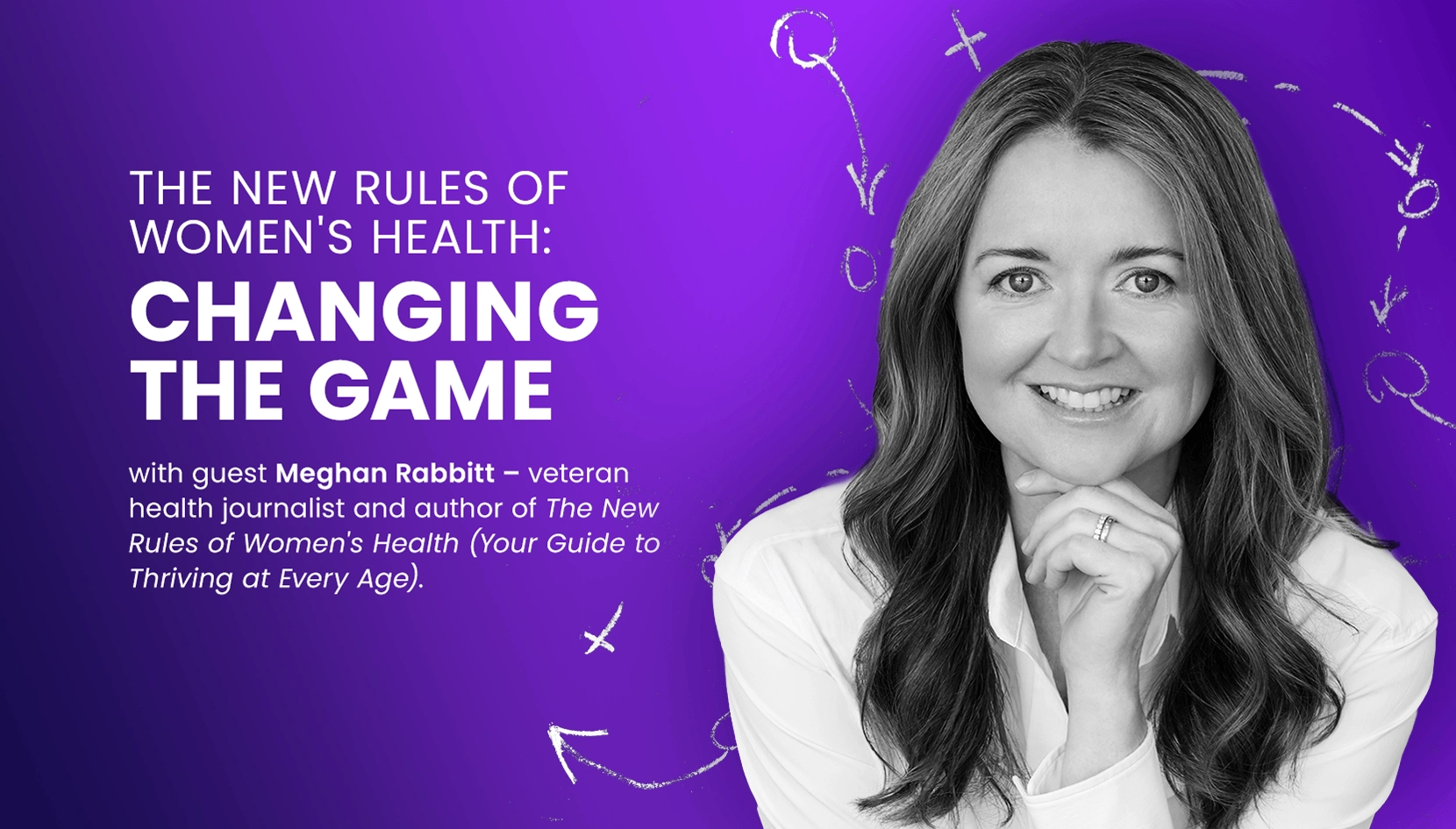


SPECIAL EPISODE 1 — When you pick up The New Rules of Women’s Health, you immediately realize it isn’t a book you read cover-to-cover in one sitting—it’s a 700-page comprehensive encyclopaedia for your entire life. In this special bonus episode of Priya’s Picks, host Priya Bathija sits down with veteran health journalist and author Meghan Rabbitt to break down how to move past outdated “bikini medicine” (focusing solely on breast and reproductive organs) to embrace whole-body health. Meghan shares how a push from Maria Shriver led to three years of interviewing over 100 top female medical experts, why asking your doctor for a second appointment is a power move, and how to “Google like a health journalist” to spot misinformation on social media.
Welcome to Priya’s Picks, a series of special bonus episodes between seasons to connect you with the assets you need to build knowledge and get the best care possible as a woman in America. In these bonus episodes, we’ll interview the writers, podcast hosts, and media makers behind some of my favorite women’s health resources.
I’m Priya Bathija. I’ve spent the last 23 years working to make healthcare better for women. And in that time, I’ve read almost every book out there on women’s health. And this is one of my top picks. It’s called The New Rules of Women’s Health: Your Guide to Thriving at Every Age by Meghan Rabbitt. This book is seriously no joke. When it came in the mail, I was shocked at how long it was and how much it covered.
I quickly realized that that was the point. It’s a comprehensive encyclopedia of women’s health divided into sections that you can flip through whenever they are relevant to your journey. It covers everything from puberty to fertility to menopause with gut, bone, skin, and heart health in between.
Priya Bathija (01:18)
Today we’re talking to Meghan about her book, but also about what she learned about owning and advocating for your health, and where she thinks digital tools and AI fit into the mix.
Meghan Rabbitt (01:32)
Hi, I’m Meghan Rabbitt. I am the author of The New Rules of Women’s Health. I’ve been a longtime health journalist, really dedicating my career to interviewing experts to find out what they’re researching and how I can help translate that research into language we all understand and action steps we can all take to really improve our health and our lives.
Priya Bathija (01:52)
For this book, Meghan interviewed the best experts in women’s health from across the country. It’s clear, easy to follow, in-depth advice that every woman should keep close by. But she didn’t just wake up one day and decide to write the most comprehensive book we have on women’s health. Instead, she got a little push.
Meghan Rabbitt (02:13)
Yeah, Maria Shriver asked me to write this book for her imprint at Penguin Random House. She really wanted me to take a big swing. She said, Meghan, I want you to write a women’s health manifesto covering everything from puberty through menopause and beyond. And so when Maria Shriver asks you to do that, you get to work. I will tell you that.
Priya Bathija (02:31)
Now let’s dive in.
Meghan, I love this book. It has over 600 pages. It’s very comprehensive. Can you tell us a little bit more about what you hope women will gain from this book and how they can use it? Because I know from my perspective, it I didn’t need to read every chapter right now, but I know they’re there and I can come back for them at a later date.
Meghan Rabbitt (03:06)
Yeah, I love that question and thank you for asking it because I think a lot of times, you know, someone will pick this book up and say, my goodness. I mean, it’s like almost 700 pages, right? So it is a big book. And the design, you know, when I was reporting it and realizing how big it was going to be if I really needed to cover everything I wanted to cover. The goal is for you to have this as a reference. It’s for it to be on your bookshelf where you can say, you know, I’ve got my annual gynecologist visit. Like, what do I need to keep on my radar? Or
Gosh, I keep hearing about perimenopause and am I going through the symptoms? Like, what even are the symptoms? And then you might open up this book and turn to the menopause chapter. I found the breast health chapter was personally really important for me when I found a lump and it led to more testing and my first breast MRI. And that chapter really helped me say, like, okay, before I freak out, what are all of the different things that a lump can be?
What do I need to ask my doctor to really make the most of the appointment? And so that’s really how I designed this book is so you could tuck in. And actually, you know, there’s a puberty chapter, which for a lot of women listening, they’re gonna be like, well, that doesn’t apply to me, but it sure does apply to the young women in your life and and all the ways puberty has changed. And isn’t it great to have an understanding of that so that we can support the young women coming up behind us? And so that’s that’s really the goal. And a friend of mine gave me a high compliment after she got the book. She said, I think this needs to be a coffee table book.
Because don’t you want the men in your life and our sons and our husbands and our our besties who are men to pick it up and to say, what’s this? And then you can be like, here’s this chapter, read it so you can help support me through this health challenge I’m going through.
Priya Bathija (04:43)
Yeah, 100%. I love that idea. And I love it from the perspective of moving far beyond bikini medicine or boobs and tubes and really representing the full picture and scope of everything that is included in women’s health. And I found it particularly helpful because I have PCOS and I think it’s hard to find resources that you can trust on PCOS. And I was about to go to an appointment with a new endocrinologist, and I was like, well, let me read up on that and refresh myself on the history of how I got diagnosed with this, why I have it, and what are some of the things I should be talking about with my doctor and that appointment. It was so helpful even though I’ve had that diagnosis since I was 17 years old.
Meghan Rabbitt (05:28)
I can relate to that in a different way, but another gynecologic concern. For years I was dealing with the symptoms of fibroids. So fibroids are benign growths in the uterus, and I had no idea I had them, but I did have a lot of symptoms that frankly I brushed aside because I didn’t know enough to bring it up with my doctor. I didn’t know enough about the landscape in order to say, wait a second, I should probably not be brushing this off as no big deal, and talking about these very specific symptoms with my clinician. And I think as women,
Sometimes we want a gold star. Like look at what a great patient I am. Look at how great my body is doing. And we focus on what’s right versus allowing ourselves the space to say, wait a second, these are some things I think you should know about. And I wonder if I would have gotten a diagnosis of my fibroids way earlier, which would have given me more treatment options.
And so that really was a North Star and a guiding principle as I was working on this book is like, gosh, I wanted to create a resource where women could do exactly that to say, is this normal? And is what I’m dealing with something that should be concerning, or should I bring it up to my doctor? And then when I do, I really feel like when we have the knowledge we need and the language we need to talk about our health, we just get so confident, you know?
And that’s how we have more productive doctors’ visits because we can be in that flimsy paper gown and say, wait a second. I know that you know bodies, but I know my body. And here’s what’s new for me. Here’s what’s different. Here’s what I read that’s based on evidence that I need to talk to you about. And man, that is so empowering.
Priya Bathija (07:02)
Yeah, it really is. And that’s what we did in building the playbook for season one was really talking through that doctor’s appointment and what you should bring in and how you should have that conversation and how asking questions doesn’t make you a difficult patient, it makes you a good patient, right? And I think your book really gives women the foundation they need to have that education before they walk into.
their doctor’s appointment and also maybe after their doctor’s appointment, if they brought up issues that they didn’t really know much about, they have an opportunity to rely on your book.
Meghan Rabbitt (07:38)
Yeah, and and dive deeper. And then what I would say, one of the surprises that turned up in my reporting is that doctors are like, look, make another appointment with us. You know, we might not be able to cover everything in one visit, but we are definitely, if you have questions after your visit, make a telehealth appointment where we can just talk about like a couple extra concerns that came up. And so yeah, I I love that. It’s like if you still feel a little confused, dive into the chapter, have a better understanding, and then say, no, I do need another appointment. And I think it could happen on a virtual visit.
Priya Bathija (08:07)
One of the pieces of feedback I’ve gotten consistently after folks have listened to season one of this podcast is they didn’t realize they could ask for that second doctor’s appointment. They didn’t realize it was on the table for them. And even just knowing that took takes a little bit of pressure off the original doctor’s visit because you don’t have to feel like you have to get to everything in fifteen or twenty minutes.
Meghan Rabbitt (08:32)
Totally. And in fact, you know, what I also learned from a primary care physician I interviewed for my book about how to make the most of an appointment, what she said, and it was such a good reminder is that if you’re coming for your annual exam, we can’t cover all the things. It’s not possible in the time you have. And and I think even in a concierge model where you might get a lot of time, you can’t cover all the things.
The your doctor needs to do a physical and check off all of her boxes for what she needs to cover. And so it’s really important to go into a doctor’s visit with a plan and understand that if it’s an annual, your doctor has an agenda, just like you might have an agenda. What she told me, and I think it is really great advice, which is to keep track in like the few months before you know you have an appointment, or even a few weeks, or even a few days if that’s what you have.
And really just keep track of all the things you want to talk about. What are the things that are like annoying you? What are the things that are impacting you, your health, your daily life? Write them all down. But before the appointment, organize that list in order of priority in terms of how they’re impacting your life. Bring that list with you to the doctor and say these words.
“Hey doc, I know we’re probably not gonna have time to cover all of these concerns today, but here’s what feels most important to me. Here’s everything I’m going through. Can you just take a glance and help us come up with a game plan for how we’re gonna tackle this?”
And she said suddenly the doctor, as a doctor, she’s like, I am gonna be like, thank you. You get that I don’t have all the time in the world, even though I wish I had all the time in the world for you. And it builds a bridge between you and your doctor that’s just gonna help set the tone for a better appointment.
Priya Bathija (10:06)
I think that’s such great advice to those that are listening and sort of navigating this in their annual appointments or in follow-up visits.
_____
Hey, it’s Priya. I just wanted to pop in here and encourage you to send this episode to a friend. The information we’re sharing here is so valuable, and it’s how we help each other get the best care possible as women in America. So hit the share button on whatever app you’re listening on. Send it to your daughter, sister, aunt, mother, a coworker, or honestly, send it to every girl dad you know. Because the more we all know, the better healthcare will be for everyone. Okay, back to the play!
_____
One of the things that I really liked about the book is it didn’t just limit this conversation to the medical conditions that we will face in our life, but you go beyond that to talk about staying informed in the digital age and really finding the right places to get information that you can trust. And many of our speakers already on the podcast have talked about using Google, using AI in different parts of this process associated with a doctor’s visit.
And I’d love to drill down on that with you a little bit more. Like can you share some tips for Googling? Like how do we Google the right medical information or as you say in the book, Google like a doctor?
Meghan Rabbitt (11:36)
I think we all need to learn how to Google like a doctor. And also I would add, like a health journalist. You know, what I want to do is help you understand right now, in this moment, exactly how I look for information. And it matches up with how doctors do too. So first and foremost, what you want to know is a skill called lateral reading. So this is you open up your, you know, your browser on your computer. Let’s say you use Chrome or Safari or whatever it is, and you open up like 10 tabs.
Open up brand new tabs. And the first tab you’re gonna search the condition you want to learn more about, PMOS, let’s say, formerly known as PCOS, because you’re like, I wonder if I have the symptoms, right? And so you might do something like PMOS and symptoms. And then when you get the search results, you want to look for big medical institutions, peer-reviewed journals, doctors who are writing about the topic, who are reputable, who aren’t then trying to sell you a bunch of PMOS supplements on the next page, you know, on their homepage.
And then in the next tab, you might do another search and again look for all of these things. You want to vet your sources really, really closely, that’s really important. I think that lateral reading skill is especially important when we find things on social media. You know, you might see an influencer or even a doctor on social media saying, like, you know.
The birth control pill is the worst thing in the world. And if it raises a red flag, you should listen to that red flag and then be like, okay, hold on, wait a second. What do other doctors say? You know, as a health journalist, I need to corroborate my information. I need to get multiple resources that are reputable to say the same thing about information before I feel like, okay, this is something I should write about. And so that’s really, really important.
And I think in this day and age where we are bombarded with information, it really is good to have a healthy sense of skepticism, you know? Another thing that doctors do and that health journalists do, and that we can all do, is be really wary of big claims. You know, this supplement will help you sleep like a baby, like this exercise is gonna help you drop 10 pounds in the next 10 days. It’s like if it makes you go, is that too good to be true?
There’s a chance it’s too good to be true. And it should be another one of those red flags to make you say, Okay, wait a second. I need to look into more information on this.
Priya Bathija (13:59)
A lot of times it’s not just Google, right? So we have AI at our disposal now and a lot of AI searches are now being integrated into Google searches and it’s hard to know sort of what is giving you what. But how do you use AI in this process of women’s health and meeting and talking with doctors?
Meghan Rabbitt (14:21)
There’s a section on AI in my book that I’m really proud of because I interviewed an expert in these large language models, LLMs that are are how Chat GPT exists, right? And notebook LM. And what she said is that think about it, these LLMs have been trained on the internet, on what we’ve been, you know, writing about for years and what we’ve been writing about and putting on the internet is sexist, is racist, and does not take into account the differences between female and male health, largely because we haven’t had a lot of research up until very recently.
And so we really have to take those AI results with a massive grain of salt. Understand that the information that AI is pulling from is not always the cleanest, for lack of a better word, when it comes to what’s really gonna matter for us as women and our health journeys. And know that. That’s not to say don’t use them, but, keep that in mind.
And again, you have to fact check the AI results you get. I would not just talk to ChatGPT about all of your menopause symptoms and whatever ChatGPT says, take as the, you know, word of God or like what your doctor would say. Like, no, no. Use it as another, like, huh. Should I trust this information? Let me do that lateral reading skill and open up a few tabs and say, okay, let me search this and what does the Mayo Clinic say about this? Let me search this result AI gave me and say, what does Cleveland Clinic say?
You know, you really wanna look at multiple sources. And if it sounds like a lot of work, it can be a lot of work. You know, it’s a lot easier to just get an AI result on Chat GPT and say, chat told me this is what’s wrong with me, but you’re not gonna get the best results from that.
Priya Bathija (16:03)
Another thing we’re seeing sort of in this space, and in the history of time, there have always been places where we’ve had misinformation and that misinformation has spread. But it seems like it impacts us on a daily basis as we’re scrolling through our phones. So, how do you spot that misinformation and disinformation, whether it’s in social media or it’s in a Google search you just referenced or an AI pull of some health information.
Meghan Rabbitt (16:34)
Really, first and foremost, is big claims that seem too good to be true or that seem really simplistic. Like the birth control pill is just bad for women. It’s like, mm, hold on a second. Like, maybe for some women, but like that is a broad claim. And someone making that big, broad claim really should should be raising a red flag and make you say, like, what else is this person talking about?
You know, like I might have to fact check or or who else is saying this, you know? So really big claims I think are big. You have to check someone’s credentials as well. So there certainly are a lot of medical doctors who are making big claims like that, where I might say, like, huh, like that doesn’t feel right to me. But there are also people who are like maybe have taken like a three-hour nutrition coaching course and now we’re dishing out all kinds of information about supplements and food and how it works in the body.
And you’re like, if you dig in, you’re like, well, what actually is your training? And so I think we really have to be checking credentials if someone is making a claim about our health. Like, what makes this person qualified to do that? you know, I also think it really is important to take a look at trends that are going around on social media. You know, I think sometimes the salacious can really be what goes viral, it catches wind and everyone’s like, my God, this is true.
And it’s like, okay, so any of those big trends that are going wild, just take a step back. Again, use that as one of those red flags to Google like a doctor or to sort out misinformation like a doctor or a health journalist and say, Hold on, I’m gonna do some background research on this to make sure it’s accurate, you know?
And then I think finally on the misinformation and the disinformation front, something I feel passionate about and a lot of experts say is like speak up against it. For example, there’s a lot of misinformation and disinformation around vaccines. And I try to do my part in a way that feels good for me to say, hey, if I see misinformation, I might say, “hey, have you seen this article?” Which offers another perspective that’s based on evidence. These are not easy conversations to have, but I feel like it’s our duty when we’re seeing misinformation to speak up about it, especially as it relates to our health.
Priya Bathija (18:49)
Yeah, and I think it’s also and you touch on this in the book, it’s our obligation to sort of look at what we’re consuming and make sure that we vetted it before we share it again, so that we’re not continuing that chain of misinformation and spreading it to all the people who are in our network.
Meghan Rabbitt (19:08)
Totally. And I think another thing too, you know, you did such a beautiful job in your first season of really talking about how to really navigate the healthcare system. And this is one way we can also use the healthcare system. Hopefully we’ve got clinicians who we really trust and admire. And you can actually say that in an appointment. You know, let’s say you’re in a doctor’s visit for your PMOS symptoms and you’re talking through that. You might say, “hey, doc, like I’m seeing this all over social media right now. What does the literature show? What does the research show? What do you think about this?”
You know, it’s what I get to do for my job, which is wow, there’s this trend going on, and I’m hearing all of this crazy stuff about women’s health online. And then I get to call like the preeminent doctors in the field and say, What do you think about this? But we can all do that with our own clinicians. We can all, and it doesn’t have to be like a special appointment. You could just be like, “What’s your take? Is there legitimacy here or is this a whole bunch of like smoke and mirrors?”
Priya Bathija (20:05)
Yeah, I love that. And I would never think to say to a doctor, which I should going forward. I saw this on TikTok and they are selling this, this, and this to help me get through this phase of my life. Do you think that is something that I should look into whether that would be helpful for me? Because like you said, it’s trends. Once something picks up on social media, it is everyone sort of spreading that same message.
Meghan Rabbitt (20:33)
And the other thing to keep in mind, you know, what I see a lot of right now is on podcasts actually, a lot of these really big podcasts, they’ll pull out like a clip of a doctor saying something. And it’s always the most wild sounding claim. And when you actually listen to the podcast, it might not be as as crazy. You know, it might be this really salacious clip to try to get people to click.
And so keep that in mind as well. A lot of these trends, what you see on social media, are like teeny tiny clips of something to get you to click in. Get as much context as you can to help you make sense of who’s saying what and what’s actually legitimate or not.
Priya Bathija (21:11)
Yeah, and one of the things I’ve gotten into the habit of doing is and like you, I’m in a lot of conversations around women’s health with experts around the country. And as I’m hearing them talk about things, I make lists of things that I wanna go and look at later. And I want to think about how those things impact me in my life because when an expert is on stage or an expert is delivering a podcast, they can’t tell you the whole story in that short period of time.
And it’s really important to sort of take it for what it is, appreciate that there’s so much nuance in how things play out in each of our bodies and we each have different factors that contribute to how things play out. So I think it’s really important to just say, Okay, I heard that expert say this, but I need to do a little bit more digging to see how it applies to me.
Meghan Rabbitt (22:07)
Yes, it’s such a beautiful point. And it’s like we have to take information and then personalize it.
Priya Bathija (22:14)
So what other advice do you have, Meghan, for women as they are navigating health care?
Meghan Rabbitt (22:20)
Overall, it’s like we have to take ownership in a new way of our health than we did before. So I think oftentimes of my mom, who had the same primary care physician for about 30 years. That’s remarkable. And that is something that will not be part of my my healthcare journey. It’s just things don’t go like that anymore. We doctors move, PCPs, especially, not too many of us don’t have a primary care physician.
And and that continuity of care. And I think as a result, we really have to take ownership and say, okay, what is my medical record? What is my personal health history? What is my family health history? How can I document that in a way that makes sense for me? And in a way that makes it easy for me to bring this to all the new doctors I’m gonna see or all the specialists I’m gonna see at some point. If you’re, you know, digital, friendly, put it in a notes app, like create something. Maybe there’s an app that exists that you really like.
That’s safe to house your medical information. If you’re hearing this and you’re like, gosh, that sounds like a really good idea. Like now is the time. You know, it’ll build from when you start it and it really will make your life easier and it will help your care. So I think that’s first and foremost is like we have to own our health in a new kind of way. And then I think too, we have to educate ourselves enough to be able to have really empowered and knowledgeable conversations with our doctors because their time is short.
We can’t go to a doctor if we’re in the menopause transition and say, so tell me about the WHI and how that really messed up women when it comes to hormone therapy. And it’s like, that is a pure waste of your time. Your doctor does not have enough time. And that is information that is readily available that you can educate yourself and really say, I understand why so many women got, you know, gypped out of hormone therapy and menopause. And now I don’t have to be.
And the better question is like, okay, so I understand that the WHI findings are now being re-debunked and the new thinking is this. But given my health history, what do you think about starting me on estrogen and progesterone in menopause? That is a different question. That’s gonna get you a lot further in that appointment. And it’s gonna make your doctor say, cool. Okay, this is someone who’s coming in here with a baseline knowledge. We can cover more ground. You know, I had a personal experience of this. I did have a new primary care physician right around the time I was finishing up reporting the book.
And her eyes, I mean, she was just like sparkly. She was like, wow, this is gonna be such a fun appointment because you’re coming with like this baseline knowledge that’s gonna help us cover more ground. It’s gonna help us go deeper. And that’s my hope for every woman. It really was again like it, I kept that image in mind as I was working on this book because I was like, gosh, like if every woman could have that, our healthcare would be totally different. We’d feel differently about how we care for ourselves and the care we get and we can take ownership and make that happen.
Priya Bathija (25:17)
I can speak to the physician’s eyes lighting up. Like I have worked in healthcare for 23 years, but it was only after reading your book, talking to the experts that were on season one that I actually said to myself, wait a second, you haven’t been a very prepared patient when you’ve gone into appointments, right? You had some of the stuff, but mostly it was, you know, as we said in the last season, a Hail Mary Pass, right? Like I’ll figure it out when I show up. I’m sure I’ll remember all my questions. Never did.
But I did what everyone said and I put together the digital binder of my medical record. I looked at my blood results over the course of the last six years and it was eye-opening to me in the sense that I could see trends in my numbers that I had never realized existed. But it was eye-opening for the doctor too, because she was like, great, we have all this data, like we can start from this point. And that was so helpful for both of us getting to the result that we wanted out of that appointment.
Meghan Rabbitt (26:16)
Totally. And a bonus, I think, of doing all of that, it’s not just good for you, but it also helps you gut check to make sure you’re with the right clinician. So if you get a doctor, if you do that kind of beautiful work and say, Hey, like gosh, I’m looking at my own trends, can you help me make sense of this? Because here’s what I’m seeing, but what do you think? And if the doctor gives you an eye roll or looks annoyed, I mean, if you have any choic when it comes to finding someone else, I would say that’s a clear sign you need to find someone else, right?
Because you want, we want to partner with doctors who want to make shared decisions with us. You know, that’s a big trend in medicine right now is shared decision making. We as patients need to be part of the process. And if we don’t have doctors who want us to be part of the process, like, uh-uh, you’re fired.
Priya Bathija (27:05)
One hundred percent. Well, Meghan, thank you for being with us and thank you for being one of those women that is pushing all of this forward. Your book is remarkable. There’s so much information in it and so much that we can all learn from it, not just in one sitting, but sort of as we go through the next few years, even longer than that in our life. So I’m so thankful to you for being with us, for doing the work that you’re doing. It is making a huge difference for all of us in the health care that we receive. So thank you again.
Meghan Rabbitt (27:38)
Thank you. I’ve loved chatting with you today.
Priya Bathija (27:46)
You can find more information about Megan’s book and where to buy it in the show notes or on our website, women’s healthplaybook.com. And to get more women’s health resources sent right to your inbox, subscribe to our Substack at womenshealthplaybook.substack.com. Thank you for listening to the Women’s Health Playbook. We hope this episode helps you receive better care as women in the United States.
If you want to dive deeper into the tactics and resources we discussed today, you can find those in the show notes for this episode. The Women’s Health Playbook is a media company focused on ensuring you have the resources, tools, and skills you need to navigate healthcare. For more plays and picks you can use to take control of your health and healthcare journey, visit us at womenshealthplaybook.com.
Our producer is Avery Moore Kloss. You can find her at averymorecloss.com.
I’m Priya Bathija.
Catch the next episode of the Women’s Health Playbook right now in your favorite podcasting app. We hope you will share this episode with a friend because the more we all know, the better healthcare will be for everyone.
In this episode, we walk you through these key topics:
- Beyond “Bikini Medicine”: Women’s health is more than reproductive and maternal health, it includes brain, heart, gut, bone health, and more!
- The “Coffee Table” Reference Guide: How to use a 700-page health book as an on-demand reference before annual exams, mammograms, or new diagnosis visits.
- The “Gold Star” Patient: Why women tend to brush off symptoms (like fibroids or heavy bleeding) to appear “healthy,” and how to stop minimizing your lived experience.
- Google Like a Doctor (or Health Journalist): Use lateral reading, a research strategy to vet sources, corroborate claims, and spot red flags on Google, TikTok, or Instagram.
- AI & Health Data Privacy: The real risks of feeding personal symptoms into AI tools like ChatGPT, Claude, or Gemini, how large language models retain historical health biases, and how to use AI to translate dense app user agreements.
- The “Prioritized List” Audible: How bringing an organized, prioritized list of concerns to your doctor can help set the tone for short appointments.
The Playbook: “Priya’s Picks” Action Items
Meghan suggests utilizing these specific strategies when researching or seeking care:
- The “Lateral Reading” Play: Never rely on a single search result. Open 10 new browser tabs and search your symptom or condition across major medical institutions (e.g., Mayo Clinic, Cleveland Clinic) and peer-reviewed journals to corroborate information.
- The App Privacy Audit: Before blindly clicking “Agree” on a period tracking or health app, copy and paste the dense legal text into an AI tool and prompt it: “Summarize what personal health data I am signing away here in plain English.”
- The “Prioritized List” Audible: When walking into your appointment with multiple concerns, say: “Hey doc, I know we probably don’t have time to cover all of these concerns today, but here is what feels most important to me. Can you help us come up with a game plan for how we’ll tackle this?”
- The Social Media Red Flag Check: If a post or clip makes a sweeping, absolute claim (e.g., “The birth control pill is bad” or “This supplement cures insomnia overnight”), treat it as a red flag and fact-check it.
Resources:
- Book: The New Rules of Women’s Health: Your Guide to Thriving at Every Age by Meghan Rabbitt
- Connect with Meghan Rabbitt: Website | Instagram
- Newsletter: The Sunday Paper by Maria Shriver